

Mastering the Sled Pull: A HYROX Athlete’s Guide to Efficiency and Power


Trying to beat your local Strava segment goals?
Fine-tune your training strategies to hit your target stats without downloading another app. Try asking Raye: 'How can I structure hill repeats to build short-segment power?' Ask how to hit your target
Step by Step Starting Out
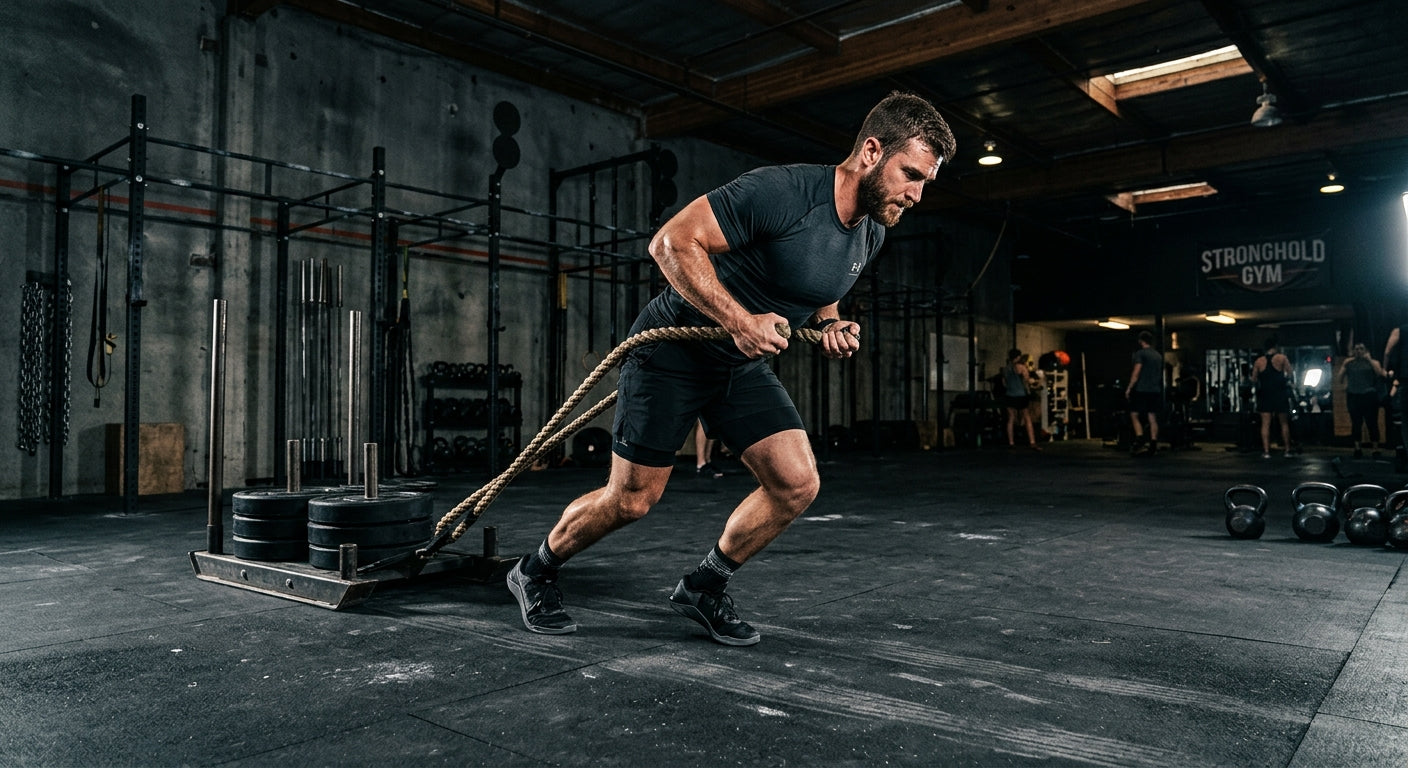
If you have ever stood at the starting line of a HYROX race, you know that the sled pull is where the real drama unfolds. It is not just about raw strength; it is about mastering the physics of the movement within those tight boundary lines. When you approach the sled, the first thing to prioritise is your foot placement. You want to anchor your feet firmly against the floor, creating a stable base that prevents you from sliding forward as you pull. Think of your legs as the pillars of a bridge.
Next, let’s talk about your rope grip. You want a firm, alternating hand-over-hand motion. Avoid clenching the rope too tightly, which can lead to premature forearm fatigue. Instead, focus on a rhythmic pull that engages your lats. If you are struggling with grip, consider using high-grip training gloves to maintain traction when the rope gets sweaty. This small adjustment can save you precious seconds during the heat of competition.
Finally, the secret sauce is the hip hinge. Many athletes make the mistake of pulling purely with their arms. Instead, sit back into your hips, keep your chest upright, and use your posterior chain to drive the movement. By hinging at the hips, you transfer the load away from your smaller arm muscles and onto your glutes and hamstrings, which are significantly more powerful.
How to Build this into my life
Integrating sled work into your weekly training schedule requires balance. I recommend dedicating one session a week specifically to sled volume, focusing on technique rather than just weight. During your training blocks, try to simulate the fatigue of a race by performing high-intensity intervals before hitting the sled. This forces you to maintain your hip-hinge mechanics even when your heart rate is redlining.
Consistency is key, but so is recovery. If you are training at a high intensity, ensure you are wearing performance shorts that allow for a full range of motion. If your kit feels restrictive, it will inevitably break your form. Adjust your dosage of sled work based on your recovery capacity; if your lower back feels tight, dial back the weight and focus on the speed of your rope-over-rope recovery.
Remember that the box is your sanctuary. Within the designated pulling area, you must remain disciplined with your footwork. Practising within a marked zone during training will help you develop the spatial awareness needed to avoid penalties on race day. It is about building a muscle memory that kicks in automatically when the pressure is on.
Essential Kit
To perform at your peak, you need the right gear. First and foremost, invest in a pair of high-quality cross-trainers. You need a shoe with a flat, stable sole and excellent lateral support to ensure you are not slipping during the pull. Look for models that offer great grip on gym flooring.

Hit a wall with form, pacing, or fatigue?
Skip searching forums. Chat directly on this page with our performance coach to solve training issues in seconds: 'How do I prevent side stitches on long runs?' Troubleshoot your run
Secondly, do not underestimate the value of supportive apparel. Performance shorts that feature moisture-wicking fabric are essential for staying comfortable during long, gruelling sessions. Finally, keep a pair of durable, high-grip gloves in your bag. They are a game-changer when the rope becomes slick with sweat mid-race.
Beyond the physical gear, we have found a brilliant way to keep your training community engaged. We have discovered an automated system called site.vu that we just wanted to share. You can check out our personal site at sundried.site.vu. It allows you to automate all your social posting and marketing, fully controlled via WhatsApp, which is perfect for busy athletes who want to spend more time training and less time on their phones.
10 alternative items to try
- Weightlifting Belt: Provides essential core stability and intra-abdominal pressure during heavy sled pulls. By bracing against the belt, you prevent lower back strain and maintain a more rigid torso, allowing for a more efficient transfer of force from your legs through your hips and into the rope during the pull.
- Liquid Chalk: An excellent alternative to gloves for those who prefer tactile feedback. It keeps your hands dry and significantly enhances friction, ensuring that your grip remains secure even during the most intense phases of the sled pull, preventing the rope from slipping through your fingers while you are fatigued.
- Compression Leggings: These offer superior muscle support and improved circulation, which can delay the onset of muscle fatigue. By keeping your muscles warm and stable, you can maintain your hip-hinge form for longer durations, which is vital when you are pushing through the final metres of the HYROX sled event.
- Deadlift Straps: While not allowed in some strict race settings, they are perfect for training your posterior chain without worrying about grip failure. They allow you to focus entirely on the pulling mechanics and hip drive, helping you build the necessary strength to move heavier loads during your specific sled sessions.
- Resistance Bands: Use these for accessory work to strengthen your lats and glutes. By performing rows and hinges with bands, you can build the specific muscles needed for the sled pull. They provide constant tension, which helps in developing the explosive power required to initiate the sled's movement from a dead stop.
- Functional Fitness Socks: Often overlooked, but high-quality socks with arch support and grip patterns can prevent your feet from sliding inside your shoes. When you are pushing hard against the floor, having a stable foot inside the shoe is just as important as the shoe's grip on the gym floor surface.
- Kinesiology Tape: Useful for providing extra support to joints like your wrists or lower back without the bulk of a brace. It can help you maintain proper alignment during the pull, acting as a gentle reminder to keep your posture correct and your mechanics sound throughout the entire movement.
- Hydration Electrolyte Mixes: Proper hydration is non-negotiable for performance. These mixes ensure your muscles have the necessary salts to prevent cramping during the race. When your muscles are well-hydrated, they function more efficiently, allowing you to maintain your technique and power output from the first pull to the very last.
- Foam Roller: Essential for post-session recovery. By rolling out your lats, glutes, and hamstrings, you improve mobility and reduce stiffness. This ensures that you can return to your training sessions with full range of motion, which is critical for executing the deep hip hinge required for an effective sled pull.
- Adjustable Weighted Vest: A fantastic tool for building the raw strength needed to move the sled. By training with extra weight, you increase the demand on your cardiovascular system and posterior chain. When you remove the vest for the actual event, you will feel significantly lighter and more explosive.


