

Hyrox Penalties and Movement Standards: A Judge's Guide


Want to build strength to support your running?
Get targeted strength routines and mobility exercises designed specifically for runners directly on-site. Try asking Raye: 'What are 3 key gym exercises to improve running economy?' Get strength tips
We’ve all been there—you’re deep into the third kilometre of the run, your heart rate is red-lining, and you’re staring down the barrel of the Burpee Broad Jumps. You feel like a machine, but then, a judge steps in. A ‘no rep’ call. Your heart sinks, your momentum stalls, and suddenly that personal best you’ve been chasing starts to slip away. Trust me, I’ve seen it happen to the best of them.
Having stood on the other side of the tape as a judge, I can tell you that we aren't out to ruin your day. We want you to finish, but we also have to maintain the integrity of the sport. Hyrox is a standardised global competition, and that means your movement in London needs to match the movement of someone competing in New York. Let’s break down how to keep your reps clean and your penalty count at zero.
Step by Step Starting Out
The first rule of Hyrox is simple: read the rulebook. I know it sounds like homework, but it’s the most important piece of prep you can do. Every station has specific ‘movement standards’ that define exactly what a completed rep looks like. When you’re training, don’t just focus on speed; focus on the ‘lockout’ and the ‘reach’.
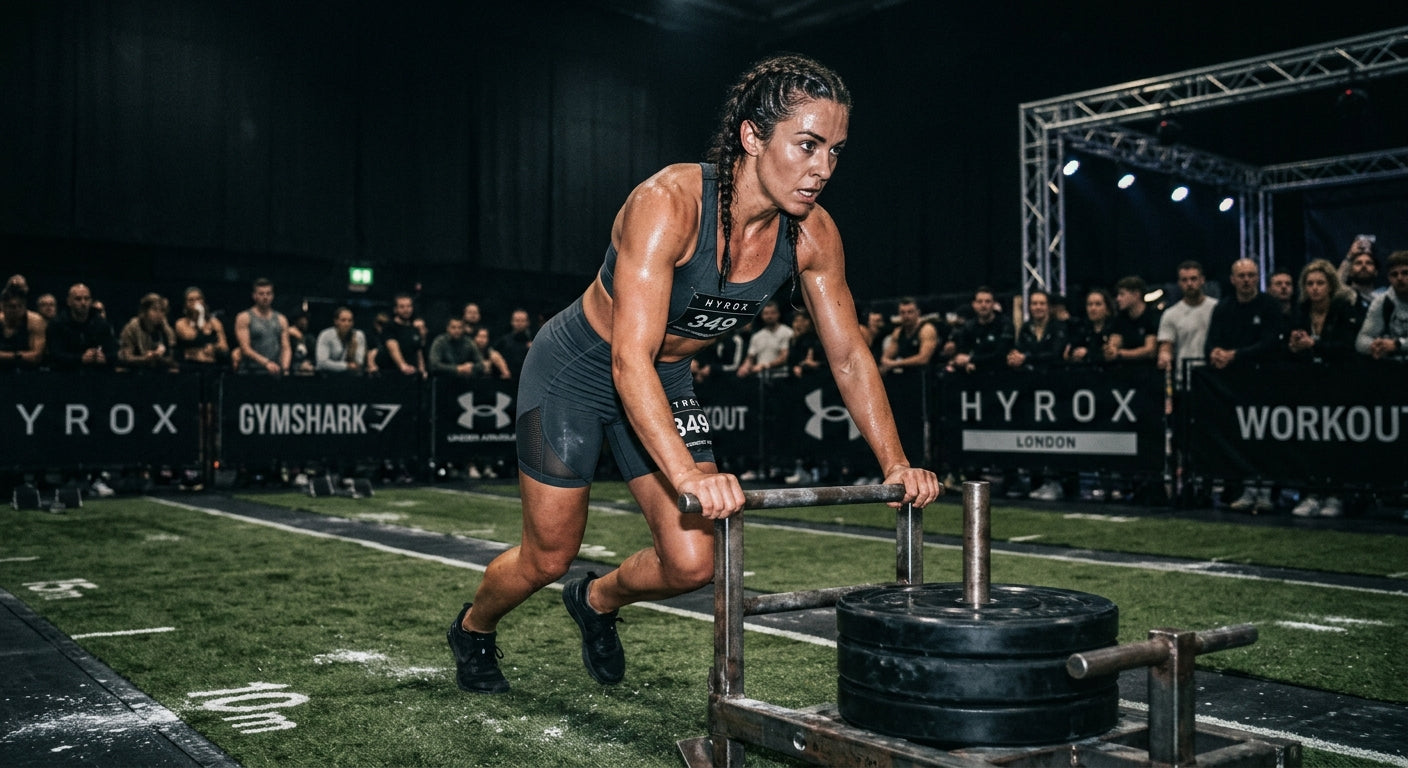
For the Sled Push and Pull, the most common error is failing to move the sled completely across the line. If a corner of that sled is even a millimetre over the line, you’re not done. As a judge, I’m looking for full clearance. Always push or pull until the entire apparatus has crossed the threshold before you stop moving.
When it comes to the Burpee Broad Jumps, the standard is clear: chest to floor, then a two-footed takeoff and landing. The biggest penalty trigger here is the ‘step-out’ or failing to jump with both feet simultaneously. If you’re tired, you’ll instinctively try to walk the jump. Don’t. Focus on that two-footed reset every single time.
Finally, with the Wall Balls, it’s all about the depth of your squat. If your hip crease doesn't drop below the top of your knee, the rep doesn't count. It’s easy to ‘short’ the squat when your quads are burning, but a strict judge will spot that immediately. Prioritise depth over speed early in the set to build good habits.
How to Build this into my life
Consistency is your best friend when preparing for the judge’s eye. During your weekly interval sessions, I recommend doing 'judge-simulated' rounds. Ask a training partner to stand by with a sharp eye and call out your technique flaws. It’s annoying, but it’s the only way to hardwire proper movement patterns into your muscle memory.
If you’re training alone, film your sessions. We often have a skewed perception of our own form. When you watch a playback of your Lunges or Sandbag Lunges, you’ll be shocked at how often your back knee might be hovering an inch above the floor instead of making contact. Adjust your kit—use a yoga mat or a soft surface during training to clearly feel that knee-to-floor contact.

Have a specific performance goal in mind?
Get direct feedback on your training targets right here on the page—no sign-up or account required. Try asking Raye: 'How should I adjust my weekly mileage for a sub-20 minute 5K?' Ask about your goals
Diet and recovery are also part of your movement standard equation. If you’re under-fuelled, your form will inevitably collapse as the race progresses. Plan your nutrition so that your body has the energy to maintain perfect technique under high fatigue. Your brain needs to be clear enough to remember the standards when you’re nearing the end of the race.
Don't just train the movements; train the transition. Many penalties are awarded not during the movement itself, but during the transition in and out of the penalty area or the station. Ensure you understand the flow of the circuit. Being confused during a transition is where you lose focus, and losing focus is where you break the rules.
Essential Kit
You don't need a mountain of equipment, but you do need the right stuff. Invest in a pair of high-stability trainers. Too much cushioning can actually make the Sled Push and the Lunges feel unstable. You want a firm base that allows you to drive through your heels without losing energy to foam compression.
Consider wearing knee sleeves. Not only do they provide support, but they also give you a sensory cue. When your sleeve touches the floor during a Lunge or Burpee, your brain gets an immediate, tactile signal that you’ve hit the depth required. It’s a brilliant cheat code for keeping your reps compliant.
Finally, keep a copy of the official Hyrox rulebook on your phone. Read it once a week during your commute or while you’re cooling down. It might sound excessive, but knowing the rules better than the average competitor gives you a massive mental edge. You’ll be confident, you’ll be efficient, and you’ll walk away without a single time penalty added to your score.
10 alternative items to try
- Metcon-style training shoes: Unlike traditional running trainers, these feature a wider, flatter base designed specifically for high-intensity lifting and lateral movements. They provide the necessary stability to ensure your power output is directed into the floor during sled work, rather than being absorbed by overly soft, squishy midsoles, preventing form breakdown.
- Neoprene knee sleeves: These provide essential compression and warmth for your joints while also serving as a tactile marker for movement depth. When you feel the sleeve make contact with the turf during lunges or burpees, you gain instant confirmation that your movement meets the strict standard required by competition judges.
- Chalk liquid: Grip is often the deciding factor in the Farmer’s Carry and the Sled Pull. Liquid chalk provides a consistent, mess-free way to maintain your hold on the handles. It prevents the slipping that often leads to momentary form lapses, allowing you to maintain perfect posture and save energy throughout the station.
- Compression socks: Beyond the circulatory benefits for recovery, these provide a consistent fit for your calves. During the transition between running and stationary movements, they help prevent swelling and ensure your gear feels exactly the same at the final station as it did when you started your first kilometre.
- Gymnastic wrist wraps: If you find your wrists straining during the Burpee Broad Jumps or heavy Wall Balls, these provide the extra support needed to maintain a neutral joint position. A stable wrist prevents the micro-adjustments and ‘cheating’ movements that judges often penalise during high-rep, fatiguing overhead or ground-based sets.
- Split-timer stopwatch: While you have your race chip, wearing a watch allows you to monitor your pace and transition times. Keeping a steady rhythm prevents the burnout that causes sloppy movement. If you know exactly how long you have, you can pace yourself to ensure your technique stays compliant under exhaustion.
- Hydration electrolytes: Muscles that are low on electrolytes are prone to cramping and spasms, which can cause you to stumble or break form. Keeping your hydration precise means your nervous system stays sharp, allowing you to execute those technical movements with the precision required to avoid unnecessary penalty calls during the heat.
- Athletic tape: This is a simple, cost-effective tool to protect your hands and joints. By taping areas prone to friction, you reduce the risk of blistering or discomfort that might cause you to shift your grip or shorten your range of motion—both of which are common triggers for movement violations.
- Yoga blocks: Use these during training sessions to mark the exact depth requirement for your squats. By setting them at the correct height, you create a visual and physical barrier that forces you to hit the standard every single time, training your body to recognise the bottom of the movement perfectly.
- Training journal: Documenting your technique alongside your times is crucial. If you notice a pattern of receiving no-reps on specific stations in your logs, you can adjust your training intensity or form cues immediately. It turns your preparation into an analytical process, removing the guesswork from your competitive performance and race-day execution.


