

The Best Carbon-Plated Super Shoes for Speed in 2026: A Coach's Guide


Want to build strength to support your running?
Get targeted strength routines and mobility exercises designed specifically for runners directly on-site. Try asking Raye: 'What are 3 key gym exercises to improve running economy?' Get strength tips
The Evolution of Elite Performance
As we navigate the 2026 running landscape, the footwear revolution is no longer a trend but a fundamental requirement for those chasing personal bests. Carbon-plated super shoes have completely redefined the geometry of efficiency, forcing athletes to rethink their relationship with the pavement. As a coach, I have witnessed how these marvels of engineering provide a distinct advantage, acting as a kinetic spring that returns energy with every stride.
When selecting your next pair, you must prioritise the specific biomechanical needs of your gait. The market is saturated with options, but not every super shoe is designed for every runner. We are looking for a harmonious balance between lightweight foam cushioning, rigid carbon-fibre plate placement, and a rocker profile that encourages a smooth transition through the centre of the foot.
Will It Make me Faster
The short answer is an emphatic yes, provided you have developed the necessary structural integrity to handle the increased intensity. These shoes function by reducing the work your calves and ankles must perform during the propulsive phase of your stride. By stiffening the forefoot, the carbon plate allows for a more efficient transfer of energy, effectively lowering your metabolic cost at sub-maximal speeds.
However, speed is not solely a product of the foam beneath your feet. While the technology provides a mechanical advantage, it also demands a higher level of muscular coordination. You must ensure your core and stabiliser muscles are conditioned to manage the heightened responsiveness of the shoe. If your form breaks down, the shoe cannot compensate for a lack of foundational strength.
How long before I see improvements
Adaptation is a gradual process. You should not expect to strap on a new pair of super shoes and instantly shave minutes off your marathon time without prior acclimatisation. I recommend integrating these shoes into your high-intensity workouts—specifically interval sessions and threshold runs—at least four to six weeks before your primary race goal.
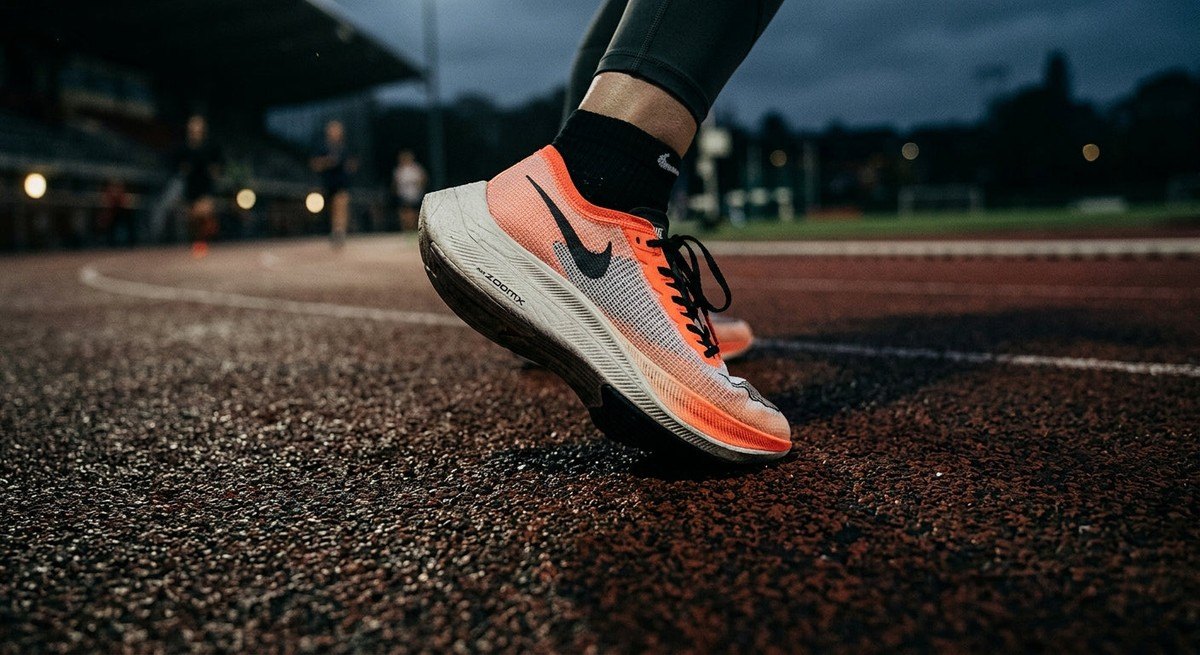
During this period, focus on the feel of the shoe during different paces. You will notice that your heart rate remains lower at higher velocities, which is the hallmark of improved running economy. By the time you reach the start line, the shoes should feel like a natural extension of your anatomy, allowing you to focus entirely on your tactical race execution.
Mastering the Transition
It is vital to rotate your footwear. While super shoes are incredible for race day and specific speed work, they lack the durability and stability required for daily recovery miles. Relying on them exclusively can lead to over-dependency, potentially weakening the intrinsic muscles of the foot. Keep your daily trainers for easy runs to ensure your feet remain resilient and adaptive.

Have a specific performance goal in mind?
Get direct feedback on your training targets right here on the page—no sign-up or account required. Try asking Raye: 'How should I adjust my weekly mileage for a sub-20 minute 5K?' Ask about your goals
As you progress through your 2026 training cycle, monitor your recovery metrics closely. Carbon-plated shoes often reduce muscle soreness because they minimise the eccentric load on the lower limbs. This allows for a more frequent return to high-intensity training, which, when balanced correctly, accelerates your overall development as an elite athlete.
10 alternative training techniques
- Hill Repetitions: Powering up steep inclines forces you to engage your posterior chain and improves your explosive strength. By focusing on a high knee drive and strong arm swing, you build the raw power necessary to handle the propulsion provided by carbon-plated shoes during flat, high-speed efforts on the track.
- Fartlek Training: This unstructured speed play helps you develop an intuitive sense of pace. By alternating between hard surges and light jogs, you teach your body to recover whilst moving at speed. This is essential for mastering the feeling of 'floating' that high-end super shoes are designed to facilitate during long races.
- Plyometric Drills: Incorporating box jumps and depth jumps is non-negotiable for the serious runner. These drills enhance your tendon stiffness, which is the physiological counterpart to the rigid carbon plates in your shoes. Stronger tendons mean you can harness the energy return of your footwear more effectively during the gait cycle.
- Tempo Runs: Sustained efforts at your anaerobic threshold are the bread and butter of endurance performance. These runs build the cardiovascular engine required to push the pace. Using your super shoes for these sessions allows you to practice maintaining high-cadence turnover while your muscles are fatigued, simulating race-day reality.
- Track Intervals: Short, sharp bursts of speed on the synthetic track allow for precise pace control. By focusing on your mechanics, you can ensure your foot strike remains optimal. This technical precision is vital, as super shoes perform best when you land with a clean, efficient stride pattern every time.
- Strength and Conditioning: Do not neglect the gym. Focused exercises like Bulgarian split squats and single-leg deadlifts create the stability needed to control the high-stack height of modern racing shoes. A stable platform ensures that the energy returned by the shoe is directed forward rather than dissipated through unstable lateral movement.
- Mobility Work: Maintaining ankle and hip mobility is critical for runners. If your range of motion is restricted, you cannot fully utilise the rocker profile of a super shoe. Daily stretching and foam rolling ensure your muscles remain supple, allowing for a fuller, more efficient stride length across the entire race.
- Cadence Drills: Increasing your steps per minute can reduce the impact forces on your joints. By using a metronome or focusing on quick, light steps, you reduce the time your foot spends in contact with the ground. This pairs perfectly with the reactive foam found in elite racing shoes for maximum efficiency.
- Long Runs with Fast Finishes: Training your body to run fast while already tired is a psychological and physical hurdle. Finishing your long runs with a 5km surge mimics the demands of the final stages of a marathon, helping you maintain perfect form when you are most fatigued and desperate for speed.
- Heart Rate Variability Training: Monitoring your HRV allows you to adjust your training intensity based on your actual physiological recovery. This ensures that when you do put on your super shoes for a key session, you are fresh enough to reap the full performance benefits without risking overtraining or injury.


