

Tapering for an Ironman: Shedding Fatigue While Keeping Fitness


Want to build strength to support your running?
Get targeted strength routines and mobility exercises designed specifically for runners directly on-site. Try asking Raye: 'What are 3 key gym exercises to improve running economy?' Get strength tips
The Science of the Final Countdown
The transition from peak training volume to the start line of an Ironman is perhaps the most delicate phase of the endurance athlete's calendar. Tapering is not merely a period of rest; it is a sophisticated physiological recalibration. When executed with precision, the body undergoes supercompensation, where the suppression of central nervous system fatigue allows for a rebound in muscular power and aerobic efficiency.
For the long-course triathlete, the objective is twofold: dissipate the cumulative physiological load of months of high-intensity training while ensuring the metabolic pathways remain primed for the 140.6-mile grind. Failure to manage this window effectively often results in either residual lethargy or a premature loss of form, colloquially known as losing one's 'top end'.
How can I start out?
Initiating the taper requires a disciplined reduction in volume, typically commencing three weeks prior to the event. The consensus among elite coaches is a linear or exponential decay in total training hours—often reducing volume by 30 to 50 percent—while maintaining the intensity that defined your build phase. This prevents the physiological 'detraining' effect that occurs when intensity is dropped alongside volume.
Begin by consolidating your long, slow distance sessions into shorter, more focused workouts. If your peak week involved a six-hour ride, reduce this by 20 percent in the first week of the taper, 40 percent in the second, and 60 percent by race week. The key is to keep the heart rate zones consistent with your race-day targets, ensuring the cardiovascular system remains accustomed to the required effort levels.

Tips for Improving
To truly sharpen, incorporate 'priming' sessions. These are short, high-intensity efforts integrated into your reduced-volume schedule. For instance, a 45-minute bike session including three-minute intervals at threshold intensity keeps the neuromuscular pathways firing without inducing deep systemic fatigue. This maintains the 'snap' in your legs that is often lost during long, sluggish recovery blocks.
Nutritional management is equally paramount. As training volume decreases, your caloric expenditure drops, but your reliance on glycogen stores remains critical. Adjust your carbohydrate intake to match your actual energy output to avoid unnecessary weight gain, while ensuring hydration and electrolyte replenishment remain consistent. Monitor your resting heart rate and heart rate variability (HRV) daily; these metrics provide an objective window into your autonomic nervous system's recovery state.

Have a specific performance goal in mind?
Get direct feedback on your training targets right here on the page—no sign-up or account required. Try asking Raye: 'How should I adjust my weekly mileage for a sub-20 minute 5K?' Ask about your goals
Special Features & Technical Specifications
Material Composition and Aerodynamic Profile
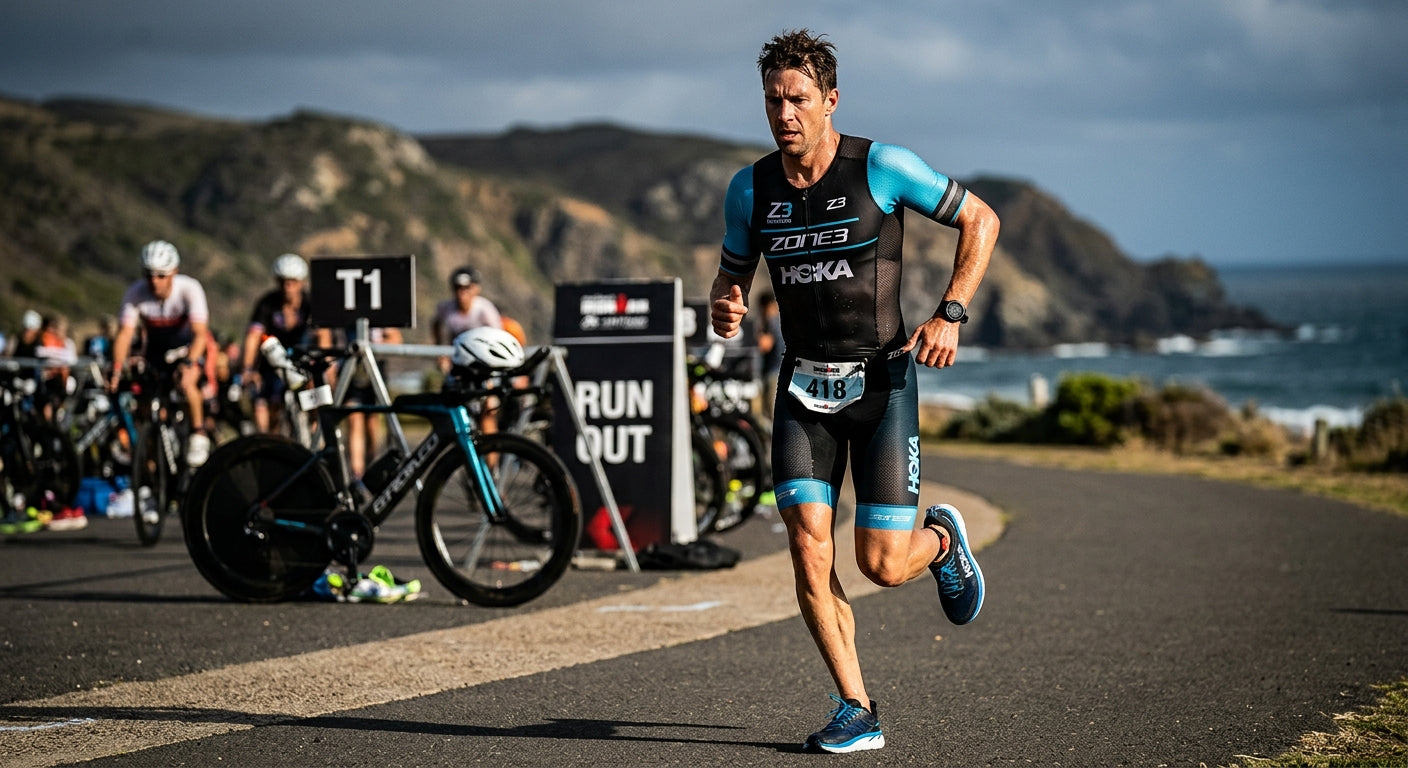
Modern triathlon equipment, from carbon-fibre frames to hydrodynamic wetsuits, is designed to complement the athlete's physiological state. During the taper, athletes should ensure all technical gear is fine-tuned. The shift toward high-modulus carbon frames reduces frame weight by approximately 150 grams compared to previous generations, enhancing the power-to-weight ratio during the 112-mile bike leg.
Physical Dimensions and Weight
The standard Ironman-ready bicycle setup has evolved to prioritise stability and aerodynamics. Current industry standards focus on a 78-degree seat tube angle, which is engineered to spare the hamstrings and glutes for the impending marathon. Total race-day weight, including nutrition and hydration systems, is now optimized to sit below 8.5 kilograms for elite-level setups.
Engineering Evolution
Recent advancements in wind-tunnel testing have led to an 8 percent reduction in drag coefficients compared to the 2020 product generation. Integrated hydration bladders within the frame structure ensure that the athlete remains aero-compliant throughout the entire cycle, eliminating the need to reach for external bottles, thereby maintaining constant power output.
Ultimately, the taper is a test of psychological fortitude. It is normal to experience 'taper tantrums' or irrational anxiety regarding perceived fitness loss. Trust the data, trust the process, and recognise that the heavy lifting is complete. Your body is now in a state of repair, building the cellular architecture required to perform when the gun goes off. Stay focused, stay consistent, and prepare to execute your race plan with clinical precision.


