

Achilles Tendinopathy Rehabilitation: A Comprehensive Guide to Recovery


Trying to beat your local Strava segment goals?
Fine-tune your training strategies to hit your target stats without downloading another app. Try asking Raye: 'How can I structure hill repeats to build short-segment power?' Ask how to hit your target
How can I start out?
Achilles tendinopathy remains one of the most persistent hurdles for the modern runner, often characterised by a stubborn, gnawing pain at the posterior aspect of the heel. When the tendon’s structural integrity is compromised, the primary objective is not merely rest, but active, controlled mechanical loading. The initial phase of rehabilitation must focus on isometric holds to modulate pain and prepare the tendon for higher-intensity forces. By performing static calf raises—holding the position at the top of the movement for 30 to 45 seconds—you can induce an analgesic effect that allows for more comfortable movement patterns throughout the day.
To commence your journey back to the track, begin with double-leg isometric holds. Ensure your centre of gravity is balanced, using a wall for stability if necessary. As your pain threshold improves, you must transition to single-leg variations, which force the musculotendinous unit to handle your full body weight. Integrating Sundried calf compression sleeves during these sessions can provide essential proprioceptive feedback and support, helping to manage fluid retention around the site of irritation.
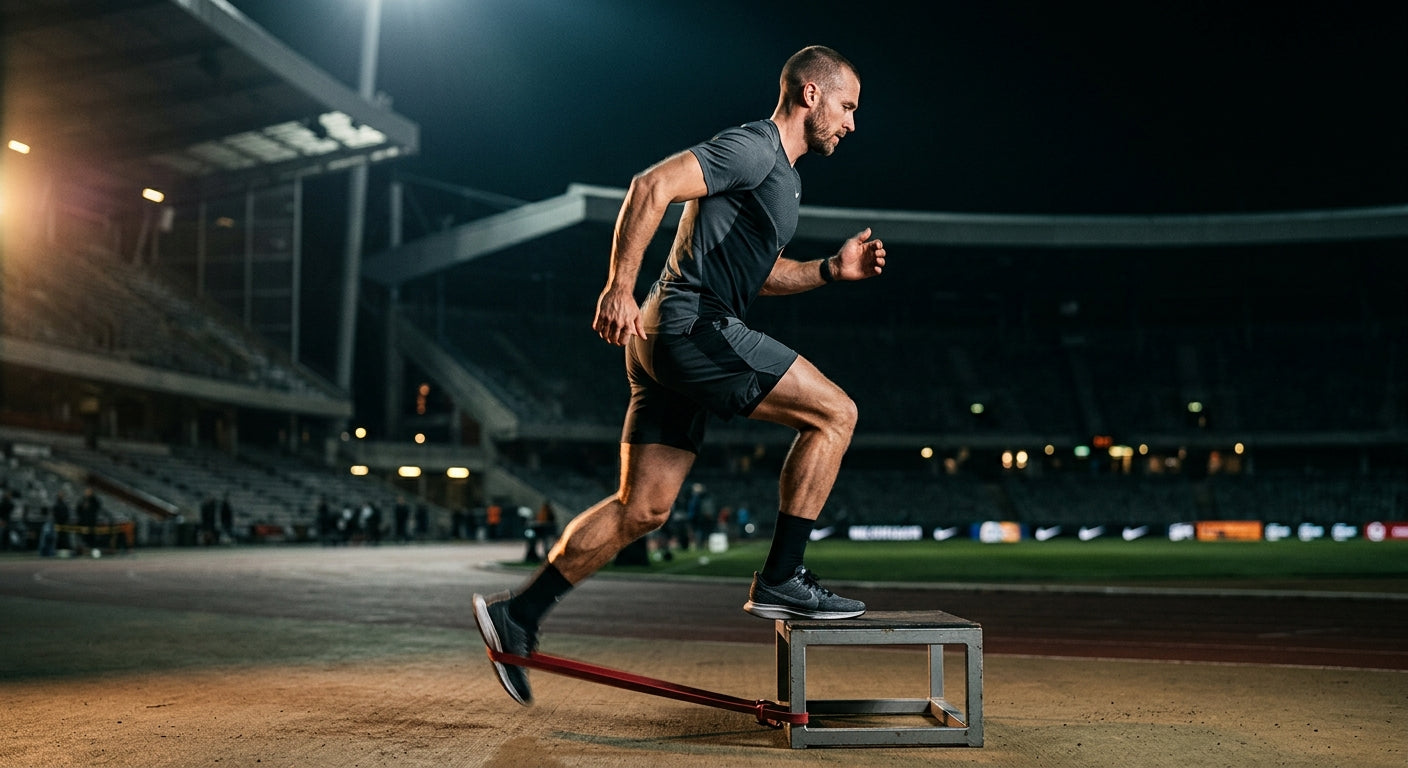
Once pain is under control, the implementation of Heavy Slow Resistance (HSR) training becomes the gold standard for tendon remodelling. This involves performing calf raises with a tempo of three seconds on the ascent and three seconds on the descent. Using resistance bands adds a controlled, variable tension that assists in strengthening the stabilising muscles around the ankle, ensuring that the load is distributed evenly across the kinetic chain rather than focalising on the damaged tendon fibres.
Tips for Improving
Progressive overload is the cornerstone of any successful rehabilitation programme. You cannot expect a tendon to regain its energy storage capacity without subjecting it to gradually increasing forces. After mastering slow, controlled movements, you must introduce explosive, plyometric-style loading to restore the tendon’s ability to act as a spring. This phase involves controlled hopping and rebounding exercises, which mimic the demands of high-speed running while keeping the total volume manageable.
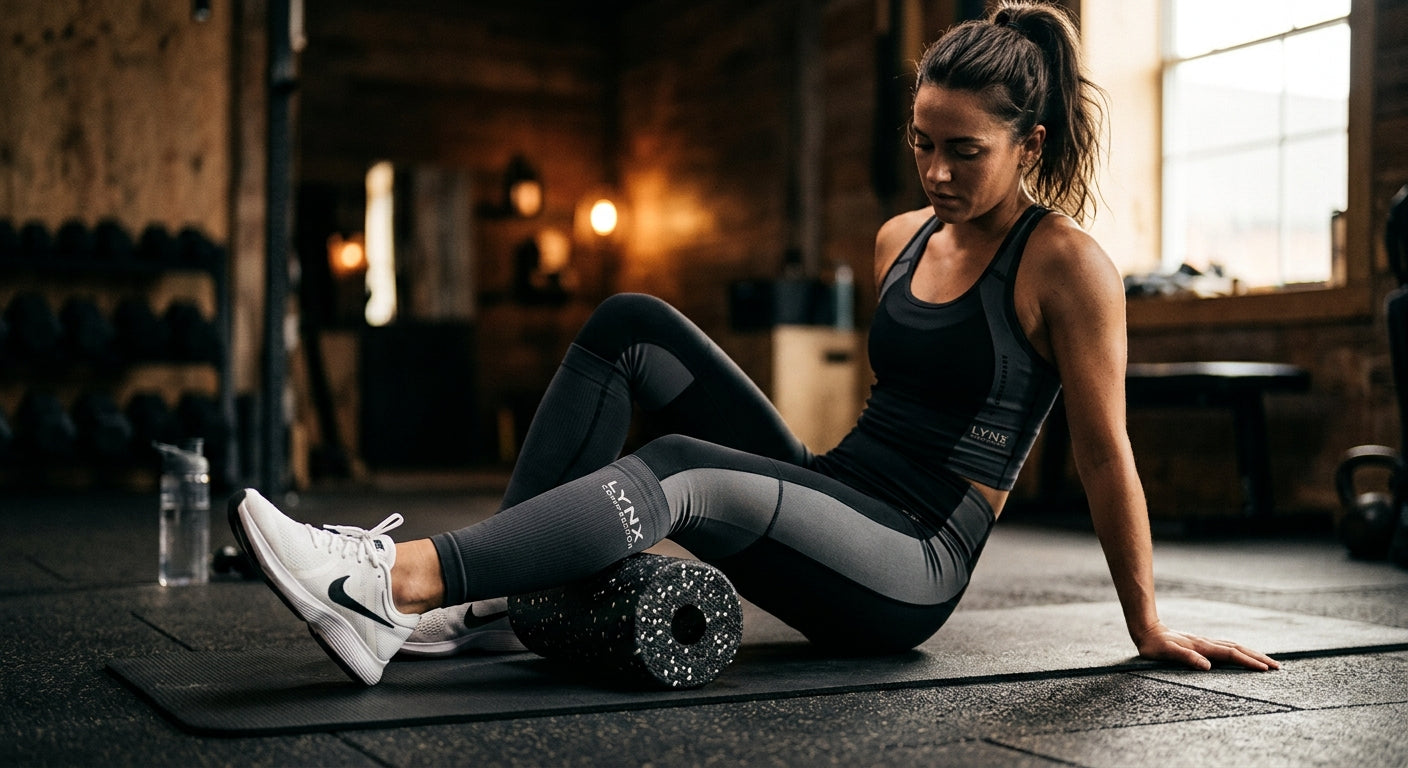
Recovery is just as critical as the work itself. Utilising foam rollers on the gastrocnemius and soleus complexes helps to reduce hypertonicity, ensuring that the calf muscles are not pulling excessively on the Achilles insertion point. Prioritise consistency over intensity; it is better to perform three short, high-quality sessions per week than one exhaustive session that leaves you limping for days. Monitor your pain levels using a 24-hour rule: if the discomfort from a session persists into the following day, you have likely exceeded the tendon’s current capacity and should scale back the load.

Hit a wall with form, pacing, or fatigue?
Skip searching forums. Chat directly on this page with our performance coach to solve training issues in seconds: 'How do I prevent side stitches on long runs?' Troubleshoot your run
Nutrition and hydration also play an understated role in collagen synthesis. Ensure you are consuming adequate protein to support the repair of the extracellular matrix. As you begin to reintegrate running, focus on your cadence. A shorter, quicker stride reduces the peak force exerted on the Achilles, allowing you to build mileage safely. Always listen to your body, as the tendon’s healing timeline is notoriously slow, often taking several months to fully adapt to the rigours of competitive training.
Special Features & Technical Specifications
Material Composition
The rehabilitation equipment recommended, specifically the Sundried compression sleeves, utilises a high-tensile elastane-polyester blend. This fabric is engineered for moisture-wicking properties and targeted compression, which assists in vascular circulation and oedema management during the post-exercise recovery phase.
Physical Dimensions and Weight
The resistance bands are calibrated for progressive tension ranging from 5kg to 30kg, providing a versatile range for both early-stage isometrics and late-stage eccentric loading. The foam rollers feature a high-density EVA core with a textured surface designed for deep-tissue myofascial release, measuring 33cm in length to ensure ease of transport in standard athletic kit bags.
Engineering Advancements
Unlike previous generation compression gear which relied on static, uniform pressure, current iterations feature zonal compression mapping. This design specifically targets the calf-Achilles junction, providing increased support where the tendon requires it most. These technical refinements represent a significant evolution in how athletes manage chronic tendon strain, moving away from passive bracing toward active, performance-enhancing support.
