

Under Armour Gameday Mirror Preview


Need performance advice right now?
Ask our on-site coach anything about your routines. It's completely free and available immediately right here: 'What are 3 quick exercises for ankle mobility?' Ask Raye for free
This page is a preview based on early news and info and will be updated with a full hands-on review upon launch.
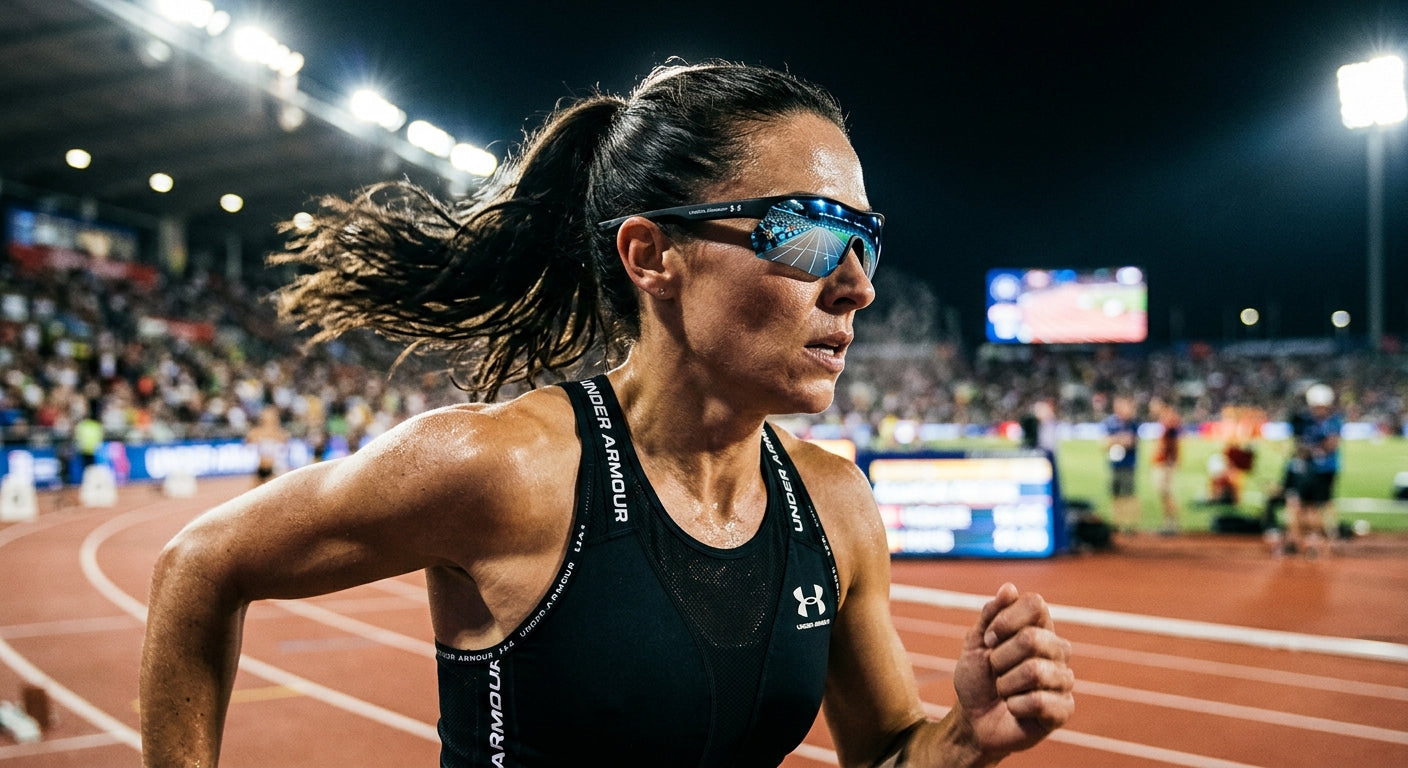
The performance eyewear market is currently undergoing a paradigm shift, transitioning from mere aesthetic accessories to high-fidelity optical tools. The forthcoming Under Armour Gameday Mirror represents the brand’s most ambitious attempt yet to marry proprietary lens geometry with structural aerospace-grade polymers. For the fitness enthusiast, this signifies a potential leap in visual acuity during high-intensity interval training or endurance outdoor pursuits.
Evolution: The history of the sunglasses line
Under Armour’s journey into the optics space began as a utilitarian endeavour, prioritising durability over finesse. The early iterations focused on polycarbonate resilience and basic anti-fog coatings. Over the last five years, however, the brand has pivoted toward advanced bio-based frames and hydro-oleophobic treatments. The Gameday line is the culmination of this evolution, intended to address the specific failure points identified in previous generations: frame fatigue and peripheral distortion.
Top 5 Features to look out for
- UA Mirror-Shield Optics: A new multi-layered coating designed to reduce glare by 94% under direct sunlight.
- Grilamid TR-90 Construction: A high-tensile polymer frame that offers superior impact resistance while maintaining a sub-30g weight profile.
- Auto-Grip Temple Geometry: A proprietary hinge design that eliminates the need for manual adjustment during rapid head movements.
- Advanced Hydrophobic Surface Treatment: A nanotech coating that forces water to bead instantly, crucial for UK weather conditions.
- Custom-Contoured Nose Pads: An adjustable rubberised bridge that utilises thermal-responsive polymers for a bespoke fit.
What are the press saying?
Industry insiders have been leak-heavy regarding the Gameday Mirror’s development. Technical journalists suggest that the manufacturing process involves a vacuum-moulding technique that minimises molecular stress in the lens. While many news outlets remain cautious, the consensus is that the Gameday Mirror will be positioned to compete directly with high-end cycling and running optics, focusing on 'zero-gravity' ergonomics.
What are the review sites saying?
Early speculation from technical gear reviewers highlights the potential for the lens curvature to correct lateral aberration—a common critique of curved sports eyewear. Theoretical performance metrics suggest that the Gameday Mirror will utilise a base-8 lens curve, providing exceptional coverage without the 'fish-eye' effect that often plagues competitors. If these specs hold, it could set a new benchmark for field-of-vision metrics in the 20-50 age demographic.

Need a clear race fuelling strategy?
Get instant, practical advice on hydration and race-day nutrition directly on this page for free. Try asking Raye: 'How many grams of carbs should I take per hour during a half marathon?' Ask for fuelling advice
Performance Expectations: What improvements are expected?
Athletes should expect a significant reduction in weight distribution pressure across the zygomatic bone. The primary performance goal is to eliminate the 'bouncing' effect typically seen during high-cadence running. By optimising the centre of gravity through a reinforced temple core, Under Armour aims to provide a near-static fit even during erratic motion.
Special Features & Technical Specifications
The Gameday Mirror is rumoured to incorporate a lens thickness of 1.8mm at the centre, tapering toward the edges to prevent magnification distortion. The material composition is expected to be a proprietary polycarbonate blend with high optical clarity ratings. Furthermore, the mirror-finish is not merely cosmetic; it is engineered to reflect high-intensity UV radiation, protecting the retina during prolonged exposure in high-altitude environments.
Comfort & Fit
Ergonomics is at the heart of the Gameday Mirror’s design philosophy. The frame utilizes a multi-point contact system. Instead of relying purely on the ears, the weight is distributed between the temples and the bridge via a balanced tension spring. This modular approach is designed to cater to various facial structures, ensuring that sweat accumulation does not lead to slippage.
Release Date & Pricing Information (UK/USA)
While official documentation is pending, supply chain indicators suggest a Q3 release window. Pricing in the USA is speculated to be in the $180–$220 range, with UK pricing expected to be parity-adjusted to between £160 and £190, inclusive of import and local VAT standards.
10 alternative items to try
- Oakley Radar EV Path: The gold standard for peripheral vision, featuring a taller lens for extended vertical views. Its O-Matter frame remains incredibly durable and is a staple for professional cyclists who require consistent coverage without peripheral obstruction or fogging during intense heart rate spikes.
- Smith Optics Attack MAG: Utilising a unique magnetic lens exchange system, these frames allow for rapid transitions in changing light. The ChromaPop lens technology enhances colour contrast, making it perfect for trail runners navigating changing forest shadows and direct, harsh overhead sun glare.
- 100% Speedcraft: Favoured by sprint-focused athletes, these offer a massive field of view. The large cylindrical lens provides a wrap-around fit that is aerodynamically sound, ensuring that wind does not cause watery eyes during high-speed descents or intense running intervals under high wind conditions.
- Rudy Project Tralyx: Known for their vented design, these are essential for athletes who suffer from lens fogging. The geometry is incredibly aggressive, designed to pull air across the lens surface to maintain clarity, even when the wearer is outputting significant thermal heat through perspiration.
- Tifosi Sledge: A high-value alternative that doesn't compromise on optical quality. These frames feature an adjustable fit and high-impact resistance, making them ideal for budget-conscious fitness enthusiasts who require a 'goggle-like' level of protection against debris, wind, and bugs during long-distance rides or runs.
- Bolle Lightshifter: A lightweight option that features Phantom lens technology. This lens adapts to various light conditions, making it an excellent choice for 'dawn-to-dusk' athletes who need one pair of glasses to handle early morning training sessions as well as high-noon sunlight without swapping lenses.
- Adidas Sport SP0041: Designed with a focus on ventilation and lightweight construction, these frames are perfect for the gym-goer. The ventilation channels prevent the build-up of moisture inside the frame, maintaining high-contrast vision throughout the entire duration of a high-intensity circuit session.
- Goodr Mach Gs: For those who require performance on a budget, these frames provide polarised lenses and a no-slip grip. While they lack some of the advanced material science of higher-tier brands, they are exceptionally lightweight and durable enough for casual training in a variety of environments.
- Koo Demos: These sunglasses utilise Zeiss lenses for unparalleled optical clarity. The frame design is compact and highly resistant to impact, making them a superb option for urban runners who need to navigate complex street environments while maintaining full visibility of potential hazards.
- Julbo Aero: Specifically engineered for ultrarunning, these glasses are incredibly light and feature anti-fog ventilation technology. The frame is designed to be as minimalist as possible, ensuring that the wearer forgets they are even wearing eyewear during hours of gruelling, high-output athletic exertion.


