

Saucony Endorphin Elite 3 Preview


Trying to beat your local Strava segment goals?
Fine-tune your training strategies to hit your target stats without downloading another app. Try asking Raye: 'How can I structure hill repeats to build short-segment power?' Ask how to hit your target
This page is a preview based on early news and info and will be updated with a full hands-on review upon launch.
The running community is currently abuzz with the impending arrival of the Saucony Endorphin Elite 3. As we approach the next iteration in this elite racing series, enthusiasts and data-driven runners are eagerly dissecting every leaked patent and prototype image available. The Endorphin line has long been a benchmark for efficiency, and the third iteration promises to push these boundaries further.
Evolution: The history of the shoe line
The Endorphin series revolutionised Saucony's trajectory in the carbon-plated racing segment. From the inception of the original Elite, the focus has been on the synergy between the PWRRUN HG foam and the geometry of the carbon plate. The progression from the first model to the current iteration shows a deliberate shift towards aggressive energy return and structural weight reduction.
Performance Expectations: What improvements are expected?
Industry insiders suggest that the Endorphin Elite 3 will prioritise a more refined rocker geometry to facilitate a smoother transition through the gait cycle. The expectation is that Saucony will continue to refine the density of the midsole to ensure that the compression-to-rebound ratio is optimised for marathon-distance fatigue resistance.
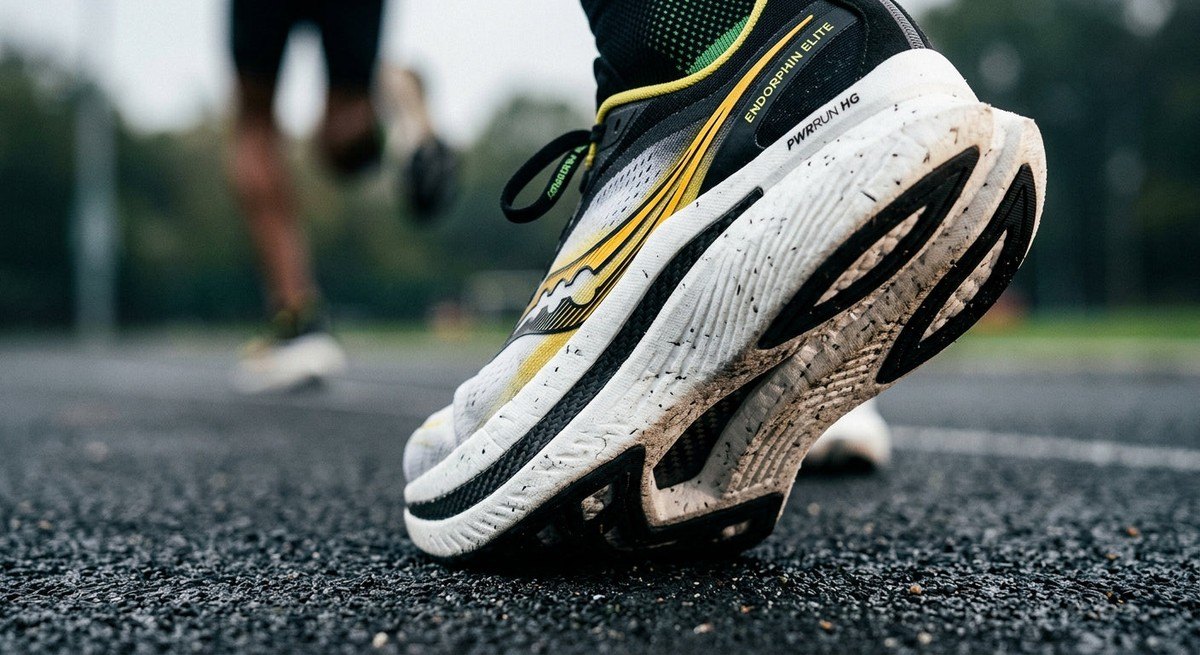
Special Features & Technical Specifications
Technically, the shoe is expected to feature an updated carbon-fibre plate architecture designed to provide a more propulsive sensation at higher cadences. The outsole compound is rumoured to be a high-traction rubber blend, specifically engineered to maintain grip on wet road surfaces without adding unnecessary bulk to the overall weight profile of the shoe.
Top 5 Features to look out for
- Advanced PWRRUN HG+ foam formulation for superior energy return.
- A re-engineered carbon-fibre plate with a more aggressive flex point.
- A lightweight, engineered mesh upper with enhanced breathability zones.
- Refined heel collar architecture to minimise slippage at high speeds.
- An updated outsole lug pattern for improved traction in variable conditions.
What are the press saying?
Early reports from trade shows suggest that the media is focused on the weight-to-cushioning ratio. Speculation is rife that the shoe will drop below the 200-gram mark, a critical threshold for elite-level racers. Journalists are noting that the prototype iterations feel exceptionally snappy during interval testing.
What are the review sites saying?
Review sites currently speculate that the Endorphin Elite 3 will be the most responsive shoe in the Saucony portfolio. Analysts are particularly interested in how the brand will balance the firmness required for speed with the comfort needed for the final 10km of a marathon. There is a consensus that this model will likely set a new standard for Saucony in the competitive racing market.

Hit a wall with form, pacing, or fatigue?
Skip searching forums. Chat directly on this page with our performance coach to solve training issues in seconds: 'How do I prevent side stitches on long runs?' Troubleshoot your run

Comfort & Fit
The fit is expected to remain true to the performance-oriented nature of the series. Expect a secure midfoot lockdown, with a slightly wider toe box than previous versions to accommodate natural foot splay during long-distance efforts. The interior lining is being designed to reduce friction, which is essential for preventing blisters during high-intensity sessions.
Release Date & Pricing Information (UK/USA)
While official dates are pending, industry forecasts suggest a global release in the coming months. Pricing is expected to mirror the premium status of the series, likely landing between £250 and £270 in the UK and approximately $275 to $300 in the USA, reflecting the advanced material science involved.
10 alternative items to try
- Nike Alphafly 3: A titan in the racing world, the Alphafly 3 utilises dual Zoom Air units and a thick stack of ZoomX foam to provide unparalleled propulsion. It is widely considered the gold standard for marathon racing, offering a distinct bouncy sensation that many elite athletes have come to rely on for setting personal bests.
- Adidas Adizero Adios Pro 3: This shoe is a masterpiece of engineering, featuring Lightstrike Pro foam and EnergyRods that mimic the metatarsals. It provides a unique, firm, and snappy ride that is perfect for runners who prefer a more grounded feel while still benefiting from the mechanical advantage of a carbon-plated system.
- Asics Metaspeed Sky Paris: Asics has focused heavily on weight reduction with this iteration, creating an incredibly light racer that feels almost non-existent on the foot. The geometry is specifically designed for stride-style runners, helping them increase their step length efficiently without sacrificing the necessary cushioning for the full marathon distance.
- New Balance FuelCell SuperComp Elite v4: Featuring an updated PEBA-based foam, this shoe provides a very soft and plush ride compared to its competitors. It is ideal for runners who want the benefits of a carbon plate but prefer a more forgiving experience underfoot, especially during the later stages of a long training run or race.
- Hoka Cielo X1: Hoka has taken a bold approach with the Cielo X1, incorporating a split-plate design and an aggressive rocker. The result is a shoe that feels incredibly fast and propulsive. It caters to runners who want a stable yet highly responsive platform that excels at maintaining momentum on flat, fast courses.
- Saucony Endorphin Pro 4: If you want a taste of the Elite technology but with a slightly more accessible price point, the Pro 4 is a fantastic choice. It shares the same DNA as the Elite series, providing a versatile ride that works well for both tempo training and race day performance, balancing durability with speed.
- Puma Deviate Nitro Elite 3: Puma has made massive strides in the racing category with their Nitro foam technology. This shoe is lightweight, grippy, and features a carbon plate that offers a very natural transition. It is a highly underrated option that provides a fantastic energy return and a very comfortable upper fit.
- Brooks Hyperion Elite 4: This shoe is designed for efficiency and simplicity. It features a straightforward, responsive feel that is perfect for those who do not want a overly complex ride. The DNA Flash foam provides a firm, reliable base that helps maintain form and cadence throughout the duration of a race.
- On CloudBoom Echo 3: On has refined their speed-focused offering, moving away from overly rigid designs to something more compliant and fast. The CloudTec elements provide a unique sensation of impact absorption followed by a firm launch, making it a great choice for runners who want a distinct, high-tech experience.
- Mizuno Wave Rebellion Pro 2: With its wild, cut-out midsole geometry, the Wave Rebellion Pro 2 is designed to force the runner onto their forefoot. It is an aggressive, high-performance tool that rewards good mechanics, providing a very fast and efficient ride for those who have the strength to handle its unique design.


