

Puma Fast-R Nitro Elite 3 Preview


Need performance advice right now?
Ask our on-site coach anything about your routines. It's completely free and available immediately right here: 'What are 3 quick exercises for ankle mobility?' Ask Raye for free
This page is a preview based on early news and info and will be updated with a full hands-on review upon launch.
The footwear industry is currently vibrating with anticipation regarding the Puma Fast-R Nitro Elite 3. As Puma continues to aggressively challenge the carbon-plated hegemony of its competitors, this iteration appears to be a radical recalibration of their elite racing geometry. By prioritising energy return and structural efficiency, Puma aims to cement its position in the sub-elite and elite marathon circuit.
Top 5 Features to look out for
- Advanced Nitro Elite foam formulation for superior energy return and weight reduction.
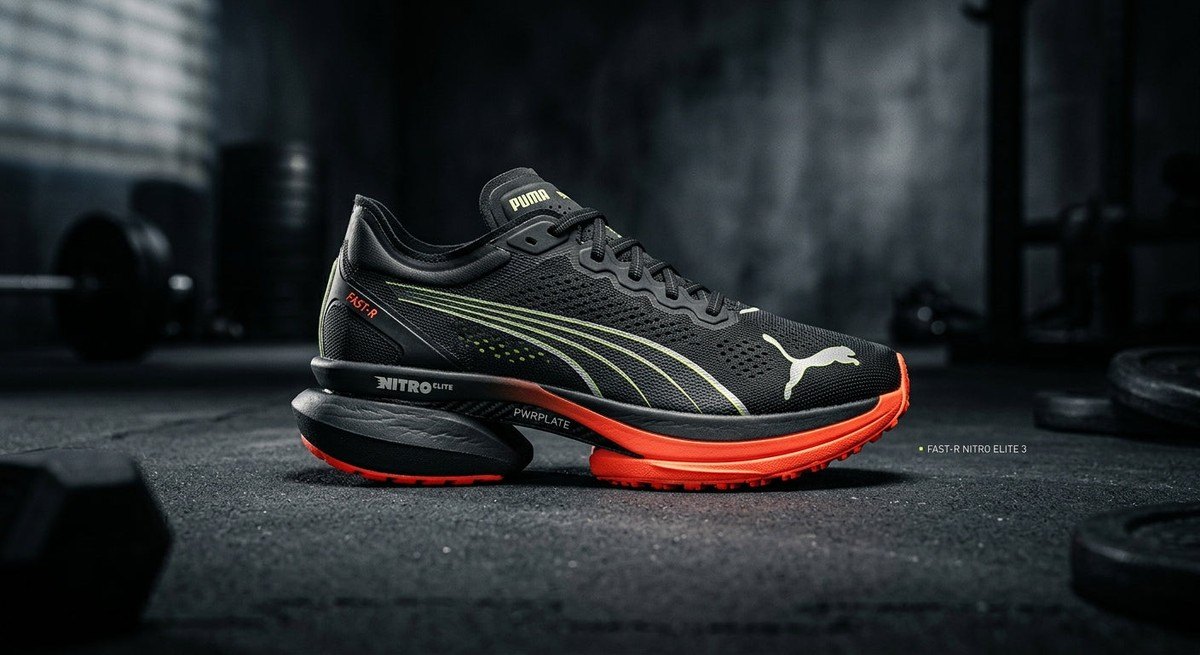
- Aggressive decoupled midsole architecture designed for maximum propulsion.
- Next-generation carbon-fibre plate geometry for enhanced torsional stiffness.
- Ultra-lightweight mono-mesh upper construction for breathability and structural integrity.
- PumaGrip-LT outsole compound for elite-level traction on varied road surfaces.
Evolution: The history of the shoe line
The Fast-R series emerged as a disruptive force, abandoning traditional midsole silhouettes for a decoupled design. The original model introduced the world to Puma's daring approach to 'split' cushioning, separating the heel and forefoot to maximise the efficacy of the carbon plate. The second iteration refined the upper fit and foam density, and the third is expected to push these metrics to their absolute physical limits.
What are the press saying?
Industry insiders and athletic journals have noted that Puma is focusing heavily on the weight-to-cushioning ratio. Early press leaks suggest that the development team has utilised proprietary computational fluid dynamics to refine the silhouette, ensuring that the shoe remains aerodynamic while maintaining the stability required for high-velocity cornering.
What are the review sites saying?
While official testing remains under embargo, community forums and enthusiast review sites are speculating on the stack height compliance. Given the World Athletics guidelines, experts are discussing whether Puma will push the 40mm limit to extract every millimetre of mechanical advantage, potentially creating a shoe that is more responsive than its predecessors.
Performance Expectations: What improvements are expected?
The primary performance goal is a reduction in total mass. Analysts expect the Puma Fast-R Nitro Elite 3 to shed several grams compared to the V2, primarily through a revamped outsole geometry. Furthermore, the interplay between the plate and the new Nitro Elite foam is anticipated to provide a more consistent energy return across the later stages of a marathon, where fatigue typically compromises gait efficiency.

Need a clear race fuelling strategy?
Get instant, practical advice on hydration and race-day nutrition directly on this page for free. Try asking Raye: 'How many grams of carbs should I take per hour during a half marathon?' Ask for fuelling advice
Special Features & Technical Specifications
Technically, the shoe relies on the synergy between the carbon plate and the Nitro Elite midsole. The decoupled heel is likely to remain, serving as a pivot point that reduces ground contact time. We expect a drop profile of approximately 8mm, maintaining a balance between aggressive forward lean and natural foot strike mechanics. Material science focus is squarely on the supercritical nitrogen-infused foam, which offers a unique density profile that is both soft under compression and rigid under impact.
Comfort & Fit
Fit is critical at this performance tier. The mono-mesh upper is expected to be reinforced in key zones to prevent lateral movement during high-speed transitions. The heel counter will likely feature a minimalist design, prioritising weight savings while providing enough structure to secure the calcaneus during aggressive toe-offs. British testers should note that the internal volume is expected to remain consistent with previous Elite models, favouring a precision-lockdown feel.
Release Date & Pricing Information
Official release dates remain fluid, though industry whispers suggest a rollout coinciding with the major spring marathon season. Pricing is expected to align with the premium carbon-plated category, likely hovering around the £230-£250 mark in the UK and approximately $260-$280 in the USA, reflecting the high-cost research and development inputs.
10 alternative items to try
- Nike Alphafly 3: A titan of the marathon world, the Alphafly 3 utilises dual Air Zoom units and ZoomX foam to provide unparalleled bounce. Its high stack height and aggressive plate make it the benchmark for long-distance efficiency, favoured by record-breakers and casual marathoners alike for its significant energy return capabilities during the final miles of a race.
- Adidas Adizero Adios Pro 3: This shoe is a masterclass in stability and propulsion. Featuring EnergyRods instead of a traditional plate, it mimics the metatarsal bones to provide a natural, snappy transition. The Lightstrike Pro foam is remarkably durable, offering a consistent feel that does not degrade as quickly as softer, less dense racing compounds on the market today.
- Saucony Endorphin Elite: Designed for those who prefer a firmer, more responsive ride, the Endorphin Elite uses PWRRUN HG foam. It is engineered to provide a very specific type of 'pop' that benefits runners who maintain high cadences. The geometry is exceptionally aggressive, forcing the runner into a forward-leaning posture that is ideal for sustained high-speed efforts.
- Asics Metaspeed Sky Paris: Asics has focused on weight reduction to an extreme degree with this model. It is designed for stride runners who increase their speed by lengthening their gait. The FF Turbo+ foam is incredibly lightweight, making it one of the most agile options for those who find heavier carbon-plated shoes cumbersome during technical road sections.
- New Balance FuelCell SuperComp Elite v4: This model offers a slightly more accommodating fit than its competitors, making it a favourite for runners who struggle with the narrow lasts of other racing shoes. The PEBA-based foam provides a plush, cloud-like landing, while the curved carbon plate ensures a smooth transition that feels less jarring on the calf muscles.
- Hoka Cielo X1: Hoka brings its signature rocker geometry to the elite racing world. The Cielo X1 is designed to roll the foot forward effortlessly, reducing the muscular load on the lower leg. It is a highly cushioned shoe that manages to remain stable, even when taking sharp turns at high velocities, thanks to its wide base.
- Brooks Hyperion Elite 4: Known for its reliability, the Hyperion Elite 4 uses a nitrogen-infused DNA FLASH v2 midsole. It is less 'bouncy' than the Nike or Puma offerings but provides a very stable, predictable platform. This makes it an excellent choice for runners who prefer a grounded feel and consistent feedback rather than excessive sink-in sensation.
- Mizuno Wave Rebellion Pro 2: This shoe is visually striking due to its radical heel-less design. It is built to encourage a midfoot-to-forefoot strike, effectively removing the heel from the equation. The Wave plate technology provides a unique stiffness that is distinct from the carbon-fibre standard, offering a firm, propulsive ride that feels very efficient at threshold paces.
- On CloudBoom Echo 3: On has finally cracked the carbon-plate code with this model. By using their Helion HF foam, they have created a shoe that feels surprisingly traditional yet highly responsive. It is a great option for runners who want a more natural ground feel without sacrificing the mechanical advantage provided by modern plate technology.
- Under Armour Flow Velociti Elite: This shoe stands out for its lack of a traditional rubber outsole, using the midsole foam itself for traction. This design choice saves significant weight and provides a very direct, tactile connection to the road. It is a fantastic choice for those who value ground feel and agility above pure, excessive cushioning.


