

Oakley Velo Kato TDF vs ROKA Matador AIR: Shield Sunglasses for Speed


Need performance advice right now?
Ask our on-site coach anything about your routines. It's completely free and available immediately right here: 'What are 3 quick exercises for ankle mobility?' Ask Raye for free
The Pursuit of Marginal Gains
In the high-stakes world of competitive cycling, where seconds separate podium finishers from the pack, equipment choices are scrutinised with clinical precision. The battle for supremacy in the eyewear category has intensified with the arrival of the Oakley Velo Kato Tour de France edition and the ROKA Matador AIR. These shields represent the pinnacle of aerodynamic design, aiming to minimise drag while maximising visual clarity. For the serious road cyclist and triathlete, selecting the right lens is no longer just about aesthetics; it is a fundamental component of race-day performance.
The Oakley Velo Kato is a radical departure from traditional frames, featuring a wrap-around lens that mimics the curvature of the orbital bone. This design ensures an expansive field of vision, crucial for maintaining awareness in a tight peloton. Conversely, the ROKA Matador AIR utilises a more conventional yet highly engineered geometry, focusing on weight reduction and advanced anti-fog ventilation to keep the rider’s vision clear during high-intensity efforts.
What do I need to buy?
To integrate these shields into your racing kit, you must first assess your helmet compatibility. Both frames are designed to sit flush against the face, but their temple arms interact differently with helmet retention systems. Ensure your current lid, such as a Sundried aero cycling helmet, offers sufficient clearance at the temples. You will also need to consider your environment; the Prizm road optics in the Oakley are exceptional for high-contrast conditions, while the ROKA lenses offer a neutral, colour-accurate profile that excels in varying light conditions.
Beyond the eyewear, professional cyclists often pair these shields with high-performance speed suits and moisture-wicking cycling socks to complete the aerodynamic profile. Investing in a hard-shell protective case is essential, as the frameless or semi-frameless nature of these shields makes them susceptible to scratches if stored improperly in a transition bag.
Why Should I invest?
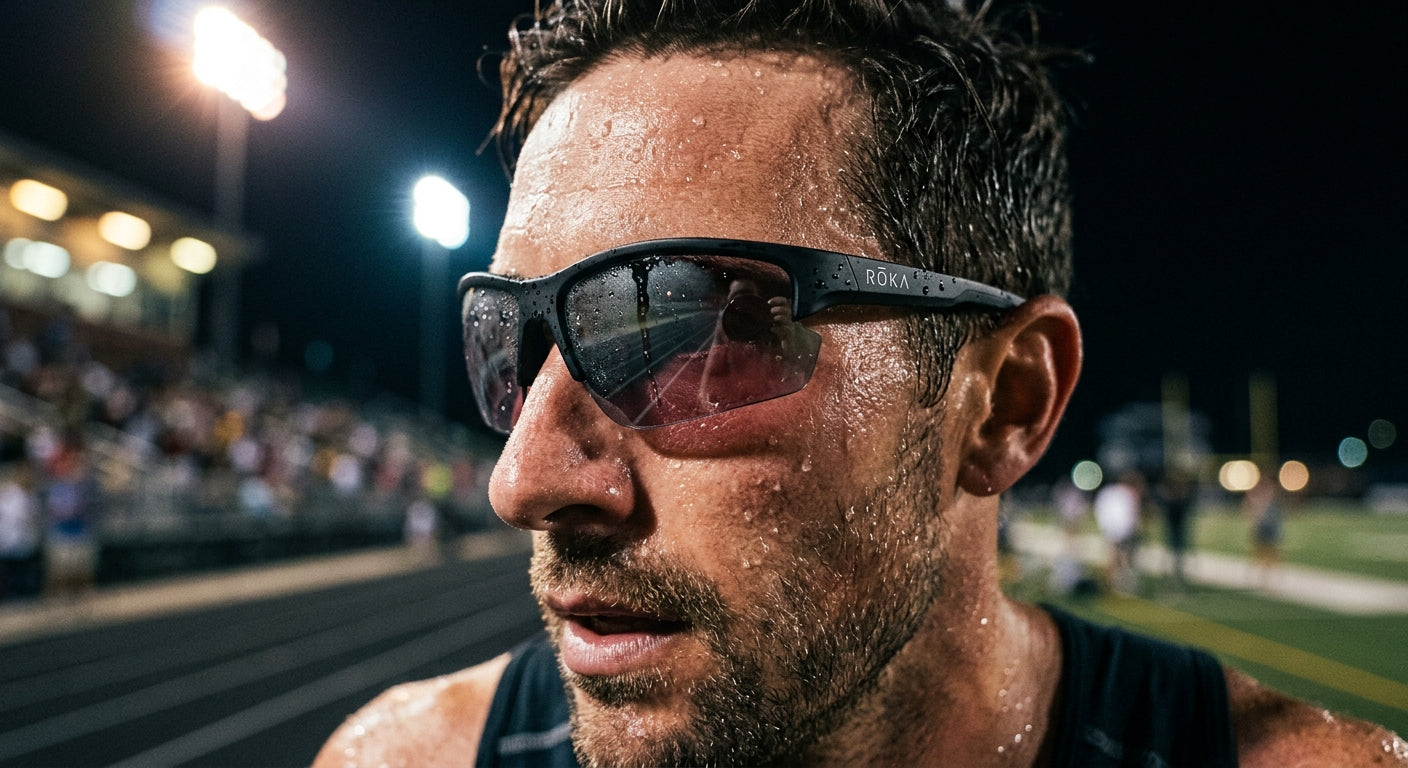
The investment in premium eyewear is justified by the reduction in turbulence around the eyes and the psychological edge of superior clarity. When you are pushing your heart rate to the anaerobic threshold, even minor visual distortions can become significant distractions. These glasses provide a 'locked-in' feel that encourages an aggressive head position, allowing you to focus entirely on your power output and the road ahead.
Furthermore, the advanced coating technologies on these lenses repel water, sweat, and oil. For a triathlete exiting the swim, the ability to rapidly clear fog and moisture is not merely a convenience; it is a safety imperative. By prioritising gear that integrates seamlessly with your helmet and aero kit, you create a holistic speed system that functions as a single, efficient unit.

Need a clear race fuelling strategy?
Get instant, practical advice on hydration and race-day nutrition directly on this page for free. Try asking Raye: 'How many grams of carbs should I take per hour during a half marathon?' Ask for fuelling advice
What are the press saying?
Industry critics have been polarised by the Oakley Velo Kato’s unconventional aesthetic. While many applaud the innovative 'extended wrap' technology for providing an unobstructed peripheral view, some journalists have noted that the lack of a traditional frame can make the glasses feel delicate during rapid transitions. The consensus suggests that while the Kato is a masterpiece of engineering, it is a specialist tool primarily suited for road racing where stability and field of vision are paramount.
What are the review sites saying?
Verified public reviews and forum discussions highlight a clear divide in user preference. ROKA Matador AIR users frequently praise the 'GEKO' grip technology, noting that the glasses remain perfectly positioned even when drenched in sweat. Rumours persist regarding a future iteration of the Velo Kato with adjustable temple lengths, though Oakley has yet to confirm these reports. Conversely, forum threads on cycling tech sites often debate the efficacy of the Matador’s ventilation, with some users reporting minor fogging in high-humidity conditions, a claim ROKA attributes to improper fitment.
Ultimately, the choice between these two giants comes down to your personal facial geometry and the specific demands of your discipline. Whether you are chasing a personal best in a time-trial or fighting for position in a road race, both the Oakley Velo Kato and the ROKA Matador AIR offer a level of performance that was once reserved exclusively for the professional peloton. By choosing wisely, you ensure that your equipment never hinders your performance when the pace accelerates.


