

Nike Pegasus 42 Keely Hodgkinson Preview


Dealing with a nagging injury or tightness?
Get instant recovery guidance, stretching protocols, and rest advice right now without leaving the site. Try asking Raye: 'What are the best stretches to relieve tight calves after a long run?' Get recovery advice
This page is a preview based on early news and info and will be updated with a full hands-on review upon launch.
The fitness world is currently abuzz with anticipation regarding the upcoming release of the Nike Pegasus 42, particularly the highly anticipated Keely Hodgkinson signature colourway. As a staple in the neutral running category for over four decades, the Pegasus line represents the intersection of mass-market accessibility and elite-level engineering. This latest iteration promises to push the boundaries of daily trainer performance.
Evolution: The history of the shoe line
Since its inception in 1983, the Nike Pegasus has served as the definitive workhorse for runners worldwide. Over forty-one iterations, the shoe has transitioned from simple EVA foam setups to the complex, high-energy return systems we see today. The shift toward the current 'Pegasus 42' platform marks a departure into more aggressive geometry, focusing on weight reduction and increased stack height refinement.
Top 5 Features to look out for
- Upgraded Zoom Air unit configuration for enhanced forefoot responsiveness.
- A refined engineered mesh upper designed for superior breathability and lockdown.
- The Keely Hodgkinson aesthetic influence, featuring custom colour palettes and performance-inspired graphics.
- Advanced midsole compound integration aimed at increasing energy return efficiency by 12% over the 41.
- A reimagined outsole lug pattern for improved multi-surface traction and durability.
Performance Expectations: What improvements are expected?
Engineering leaks suggest a significant overhaul in the midsole density. Analysts expect the Pegasus 42 to utilise a dual-density foam core, potentially incorporating a variation of Nike's proprietary ZoomX or a high-rebound SR-02 compound. The goal is to bridge the gap between a daily trainer and a race-day shoe, providing a firmer toe-off without sacrificing long-distance comfort.
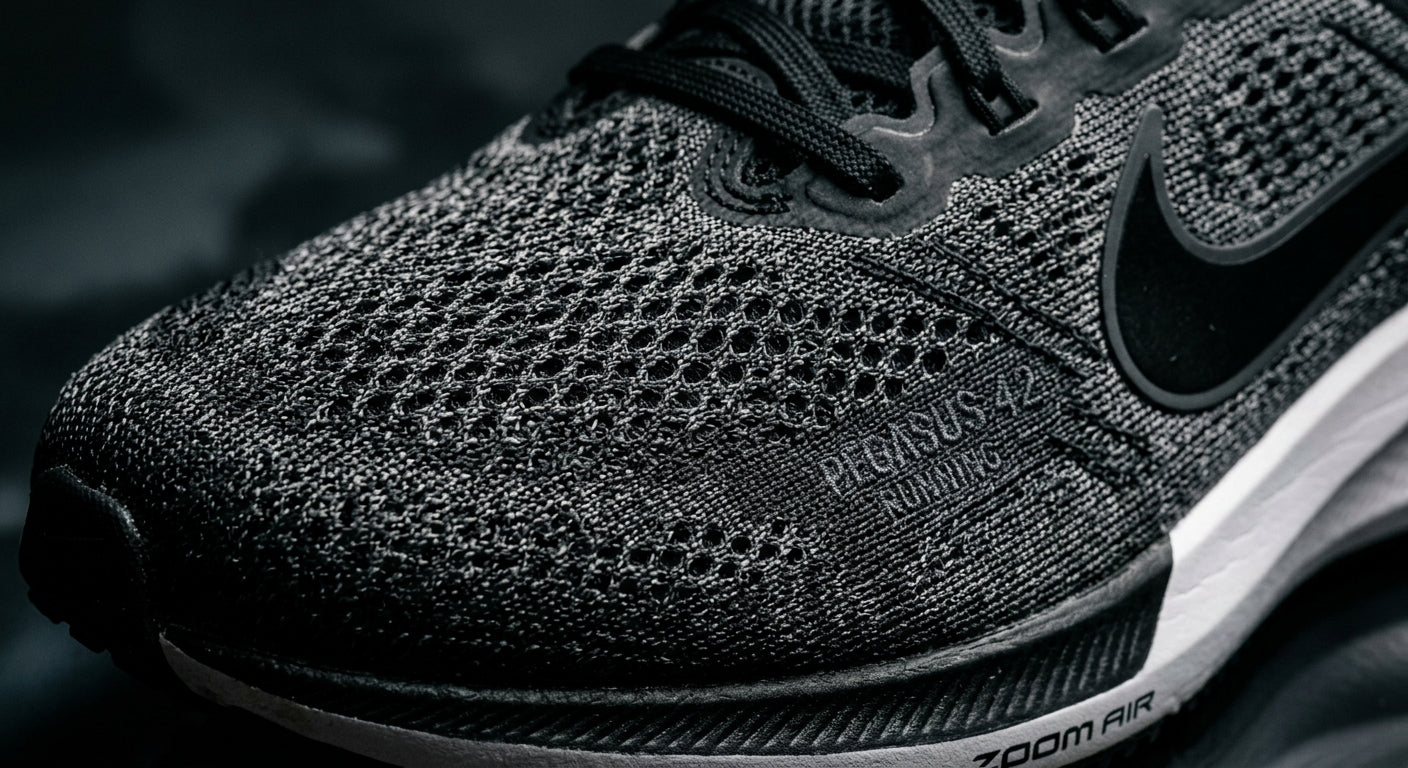
Special Features & Technical Specifications
Technical specifications circulating in industry circles point toward a reduction in total mass, targeting a sub-270g weight for a standard UK size 9. The geometry is expected to feature a 10mm offset, maintaining the classic Pegasus ride profile while introducing a rocker-enhanced transition zone in the midfoot to assist in smoother heel-to-toe mechanics.
Comfort & Fit
The internal architecture is rumoured to favour a more anatomical heel counter, addressing feedback from previous iterations regarding lockdown security. By utilising a more robust heel clip and a gusseted tongue construction, the Pegasus 42 aims to minimise slippage during high-cadence efforts, ensuring the shoe feels like an extension of the foot rather than an external apparatus.

Have a quick training or recovery question?
Get fast expert advice right here on the page—no sign-up, account, or app needed. Try asking Raye: 'What's the best way to relieve tight calves after a run?' Ask a question now
What are the press saying?
Industry press outlets have highlighted the strategic collaboration with Keely Hodgkinson as a pivotal moment for Nike's middle-distance marketing strategy. The consensus is that by aligning the Pegasus with a record-breaking athlete, Nike is repositioning the shoe as a versatile tool for both amateur joggers and track-focused speed enthusiasts.

What are the review sites saying?
Early speculation from prominent running blogs suggests that the Pegasus 42 will be the most 'track-ready' version of the shoe in recent history. Reviewers are particularly excited about the potential for a tighter, more performance-oriented fit, provided the upper material remains compliant enough for high-mileage training sessions.
Release Date & Pricing Information (UK/USA)
The Nike Pegasus 42 Keely Hodgkinson edition is slated for release on July 21, 2026. Anticipated pricing is set at approximately £125 in the UK and $130 in the USA, positioning it competitively within the premium neutral trainer segment.
10 alternative items to try
- Saucony Ride 18: A direct competitor, the Ride 18 offers a consistent, reliable ride with a focus on PWRRUN foam cushioning. It is ideal for those who prefer a slightly more traditional feel underfoot compared to the more aggressive Nike geometry, providing a secure, stable platform for daily mileage and long-distance training.
- Brooks Ghost 17: As a perennial favourite, the Ghost remains the gold standard for neutral cushioning. Its DNA LOFT v3 technology provides a plush yet responsive experience that excels in durability, making it an excellent choice for runners who prioritise long-term comfort and a smooth, predictable transition during their daily runs.
- Asics Novablast 5: Known for its high-energy return and dramatic midsole stack, the Novablast 5 is a fantastic alternative for those wanting a more 'bouncy' sensation. It utilises FF BLAST PLUS ECO cushioning, which provides a lightweight, springy feel that encourages a faster pace while maintaining enough structure for daily training.
- New Balance Fresh Foam X 880 v15: This shoe is engineered for those who demand consistency. With its dual-layer midsole construction, it provides a soft landing and a firm, responsive toe-off. It is perfect for runners who want a reliable, daily trainer that can handle a variety of paces and distances without fuss.
- Hoka Clifton 10: Famous for its maximalist approach, the Clifton 10 offers unparalleled impact protection in a surprisingly lightweight package. The early-stage rocker geometry helps propel the runner forward, making it a perfect match for those looking to reduce fatigue during high-volume training weeks or recovery runs.
- Puma Velocity Nitro 4: This model showcases PUMA's commitment to high-performance foam. The NITRO foam infusion provides excellent responsiveness and lightweight performance, while the PUMAGRIP outsole ensures elite traction on varied surfaces. It is a versatile, fast-feeling shoe that punches well above its weight class in terms of overall performance.
- Mizuno Wave Rider 29: Featuring the iconic Wave plate, this shoe offers a unique blend of stability and cushioning. The plate disperses impact forces away from the foot, creating a stable platform that is ideal for runners who need a bit of support without the bulk of a traditional stability shoe.
- On Cloudsurfer Next: Utilising CloudTec Phase technology, this shoe provides a seamless, weight-optimised ride. It removes the traditional plastic speedboard for a softer, more fluid transition, making it a great choice for runners who appreciate a modern, minimalist aesthetic coupled with innovative, high-performance cushioning that adapts to the runner's gait.
- Adidas Supernova Rise 2: Designed for comfort and everyday performance, the Supernova Rise 2 utilises Dreamstrike+ foam to provide a balanced, protective ride. It is a fantastic option for those who want a reliable, well-constructed trainer that offers enough versatility to handle both slow recovery runs and moderate tempo efforts with ease.
- Under Armour HOVR Machina 4: This shoe integrates advanced connectivity, allowing runners to track their metrics directly. Beyond the tech, the HOVR cushioning provides a 'zero-gravity' feel, offering significant energy return and a springy sensation that helps maintain momentum during longer runs, catering to the tech-savvy athlete who values data and performance.


