

Garmin Forerunner 965 vs Apple Watch Ultra 3: The Ultimate Triathlete Showdown


Dealing with a nagging injury or tightness?
Get instant recovery guidance, stretching protocols, and rest advice right now without leaving the site. Try asking Raye: 'What are the best stretches to relieve tight calves after a long run?' Get recovery advice
The Multisport Dilemma
For the modern triathlete, the choice of wrist-worn technology is no longer a mere preference; it is a critical component of training architecture. The Garmin Forerunner 965 and the Apple Watch Ultra 3 represent the pinnacle of wearable engineering, yet they cater to fundamentally different philosophies of performance tracking. This analysis dissects their utility for the rigours of iron-distance racing.
The Forerunner 965 stands as a dedicated sports computer, prioritising granular data and battery longevity. Conversely, the Apple Watch Ultra 3 serves as a sophisticated smart device that bridges the gap between daily lifestyle integration and high-intensity athletic monitoring. Choosing between them requires an understanding of your specific racing goals.
What do I need to buy
To maximise your multisport efficiency, your investment should extend beyond the watch itself. While the Garmin provides native support for cycling power meters and advanced running dynamics, you will require a high-quality chest strap heart rate monitor for maximum accuracy. For the Apple ecosystem, a robust third-party app like Athlytic or WorkOutDoors is essential to unlock the deep-dive metrics that serious competitors demand. Do not forget to browse for professional-grade gear such as Sundried triathlon transition bags to organise your kit, alongside aerodynamic tri-suits and quick-drying sports towels to ensure your transition zones remain seamless.
Why Should I invest?
Investing in a purpose-built multisport watch is an investment in your data integrity. The Garmin Forerunner 965 offers multi-band GNSS, which is essential for maintaining a precise track during open-water swimming or navigating tight urban canyons during the bike leg. Its AMOLED display remains remarkably legible under the harsh glare of direct midday sunlight, a non-negotiable feature for those racing in equatorial or high-altitude conditions.
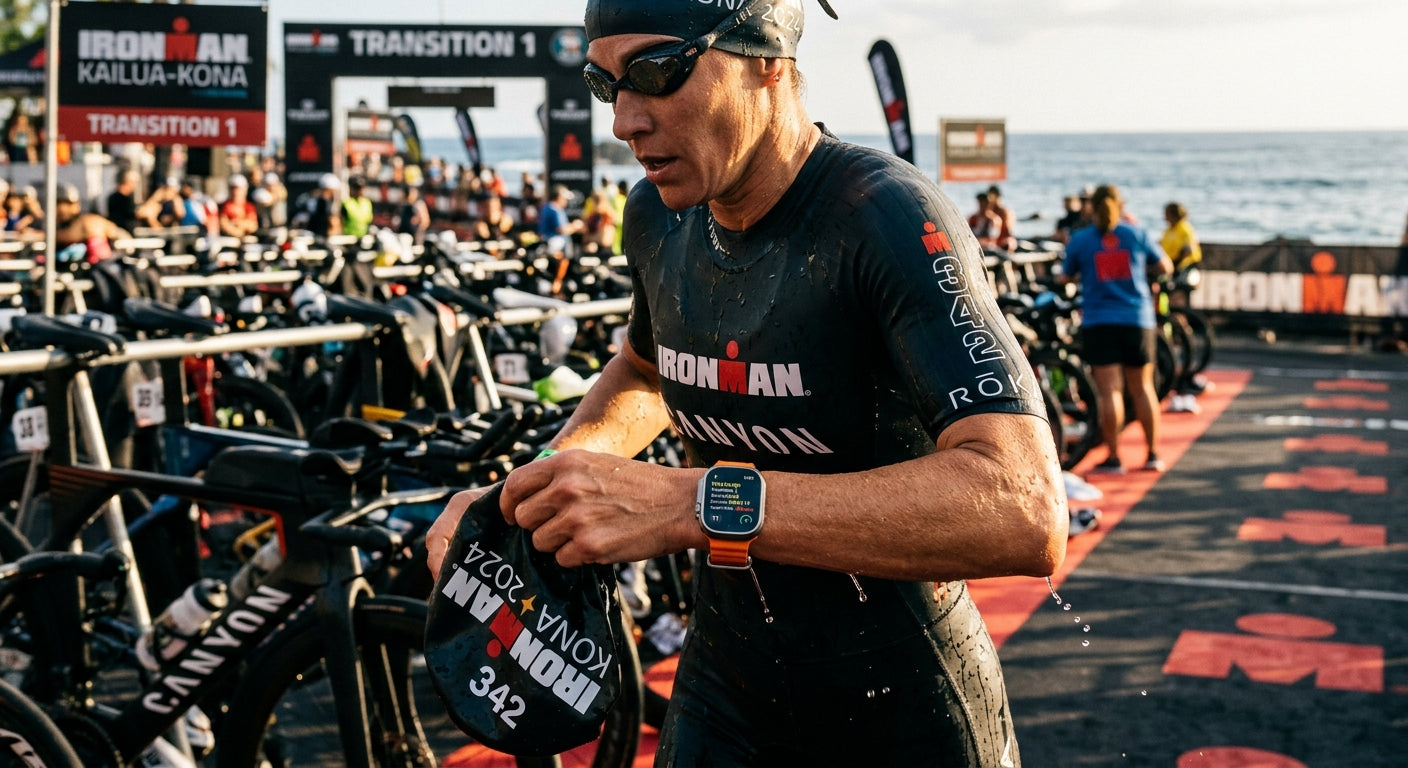
The Apple Watch Ultra 3, however, offers an unmatched user interface. The transition tracking is exceptionally intuitive, allowing athletes to switch between disciplines with a simple button press. If your lifestyle necessitates constant connectivity—receiving race-day updates or managing professional communications while training—the Apple Watch provides a level of ecosystem synergy that Garmin cannot replicate.
What are the press saying?
Industry critics have been largely unanimous regarding the Forerunner 965, praising its staggering battery life that comfortably survives a full-distance Ironman without triggering low-power modes. The consensus is that Garmin remains the gold standard for pure endurance athletes who treat their watch as a laboratory on their wrist. There is, however, ongoing debate regarding the Apple Watch Ultra 3’s battery limitations during ultra-endurance events, with many experts suggesting it remains better suited for Olympic or 70.3 distances rather than the full 140.6-mile slog.

Have a quick training or recovery question?
Get fast expert advice right here on the page—no sign-up, account, or app needed. Try asking Raye: 'What's the best way to relieve tight calves after a run?' Ask a question now
What are the review sites saying?
Public sentiment on forums and verified review sites highlights a clear divide. Users report that the Apple Watch Ultra 3’s haptic feedback during transitions is superior, providing a tactile confirmation that is often missed when wearing thick neoprene. Conversely, dedicated triathletes on community boards frequently cite the Garmin’s 'Training Readiness' score as the deciding factor, noting that it provides a more objective assessment of recovery needs compared to the Apple Watch’s rings-based activity system.

Regarding GPS accuracy, independent field tests confirm that both devices perform exceptionally well in open water. The Garmin’s multi-band technology shows a slight edge in complex environments, though the difference is largely negligible for the average age-grouper. The real differentiator remains the operating system; Garmin’s button-based navigation is preferred by those who find touchscreens unreliable when hands are wet or gloved.
Ultimately, the decision rests on your prioritisation of data depth versus smart convenience. If you require a device that functions as a dedicated coach, the Forerunner 965 is the superior instrument. If your training is complemented by a need for seamless digital integration and a premium display experience, the Apple Watch Ultra 3 is an formidable contender.
Regardless of your choice, ensure your kit is prepared with the correct accessories. Equipping yourself with specialised Sundried triathlon gear will ensure that your transition between the water, the bike, and the run is as efficient as the data you are tracking. Mastery of the sport requires both the right mindset and the right technology.


