

Garmin Forerunner 70 vs COROS Pace 3: The Definitive Entry-Level Running Watch Showdown


Planning your next fitness milestone?
Get immediate guidance on pacing, workout structure, or race prep directly on-site for free. Try asking Raye: 'Can you outline a simple 4-week build plan for a 10K?' Get instant guidance
The Landscape of Entry-Level Tracking
For the modern runner, the transition from smartphone tracking to a dedicated wearable is a rite of passage. The market is currently dominated by two distinct philosophies: the established, data-rich ecosystem of Garmin and the lean, battery-optimised engineering of COROS. Choosing between the Garmin Forerunner 70 and the COROS Pace 3 requires an understanding of how these devices manage your biometric data and long-term training load.
The Garmin Forerunner series has long been the gold standard for reliability. It offers a robust interface that prioritises ease of use for those who simply want to lace up and go. Conversely, the COROS Pace 3 enters the fray as a disruptive challenger, offering premium features at a price point that makes high-performance tracking accessible to the masses.
What do I need to buy
Before you commit to a device, you must assess your immediate training requirements. To complement your new watch, you should prioritise high-quality apparel. A pair of Sundried entry-level running shorts provides the necessary freedom of movement, while a lightweight, sweat-wicking tee is essential for moisture management during high-intensity sessions. Furthermore, do not overlook the importance of hydration; a dedicated water hydration belt is a vital accessory for those transitioning to longer distances.
When selecting your watch, consider the display technology. The COROS Pace 3 features an advanced screen that balances visibility with power efficiency, whereas the Garmin range often utilises tried-and-tested MIPS technology for superior outdoor readability. If you are training for your first 10k, ensure your kit includes these essentials to facilitate a seamless transition into a structured routine.
Why Should I invest?
Investing in a dedicated running watch is about more than just checking your pace. It is about data integrity. Unlike smartphone GPS, which can be inconsistent in urban environments or wooded trails, these watches utilise multi-band satellite connectivity to provide a precise map of your effort. Understanding your heart rate zones and cadence is the quickest route to injury prevention and performance gains.
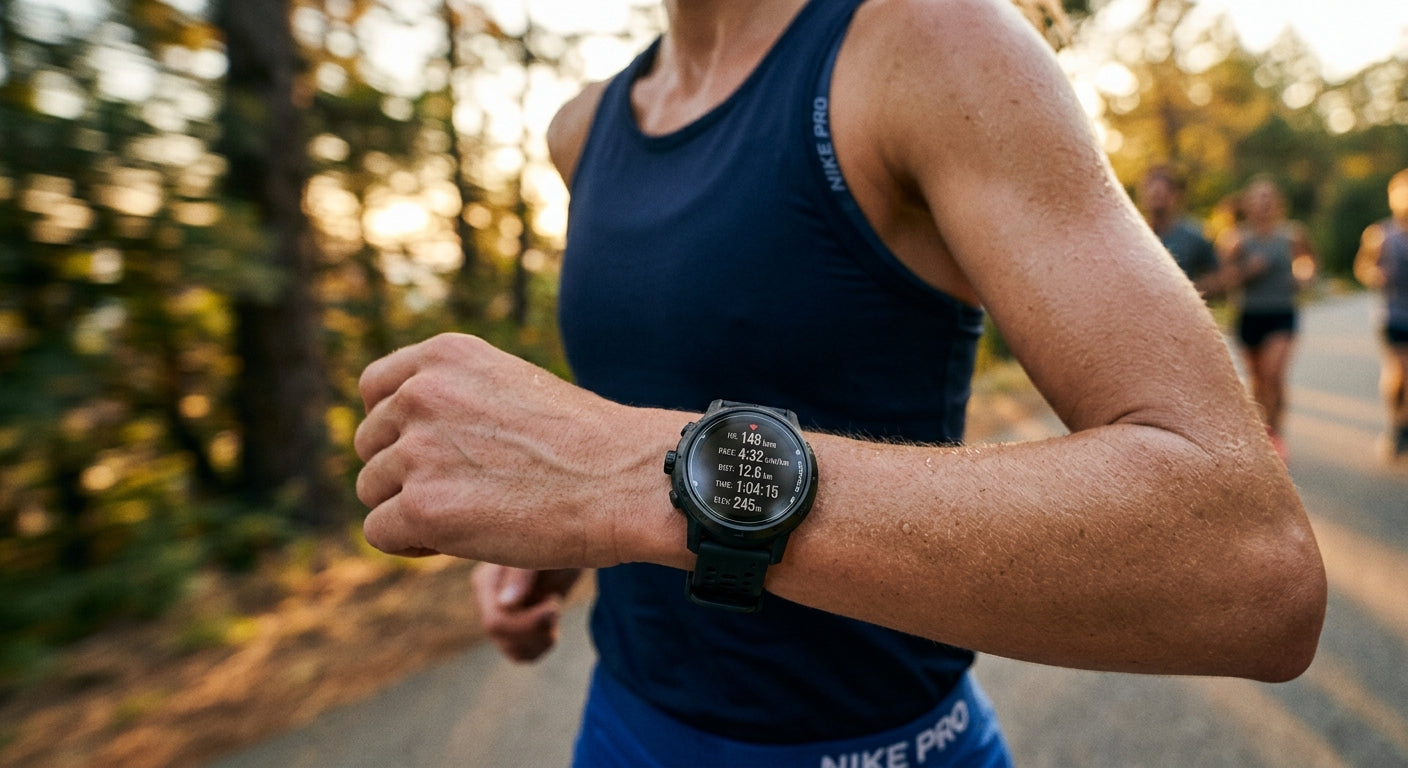
Beyond the hardware, you are buying into a data ecosystem. Garmin Connect is renowned for its deep analytical tools, providing a comprehensive historical view of your fitness progression. COROS, meanwhile, focuses on a minimalist, highly intuitive app design that simplifies complex metrics, making it easier for intermediate runners to adjust their training load without feeling overwhelmed by data points.

Looking to shave time off your personal best?
Get immediate pacing strategies and interval workout ideas directly on-site for free. Try asking Raye: 'What is the best threshold session to help drop my 10K time?' Get instant pacing tips
The Technical Divide: Battery and Display
Battery life remains the most critical differentiator in this segment. The MIPS displays utilised by these manufacturers are designed to sip power, allowing for weeks of standby time. While some enthusiasts clamour for AMOLED screens for their vibrant colours, they often come at the expense of battery longevity. The current consensus among seasoned runners is that consistent, reliable data collection outweighs the aesthetic appeal of a high-resolution display.
Weight is another factor that cannot be ignored. The COROS Pace 3 is engineered to be feather-light, barely noticeable on the wrist during a sprint. Garmin’s design language leans slightly towards durability, ensuring the device can withstand the rigours of trail running and inclement weather. Both devices offer basic interval structuring, allowing you to programme your warm-ups, work intervals, and cool-downs directly on the watch face.
What are the press saying?
Industry critics have been largely unanimous in their praise for the COROS Pace 3’s value proposition. Tech journalists have noted that the inclusion of dual-frequency GPS in such an affordable unit is a game-changer for the entry-level market. There is a verified consensus that the watch punches well above its weight class in terms of satellite locking speed and general accuracy.

Garmin reviews, conversely, often focus on the polish of the user experience. Critics appreciate the maturity of the Garmin ecosystem, noting that while the hardware may feel iterative, the software remains the most stable and feature-rich in the industry. The consensus is clear: if you value ecosystem longevity, Garmin is the safe harbour; if you value raw performance-to-price ratio, COROS is the current leader.
What are the review sites saying?
Public forums and user-generated review sites are currently rife with anecdotal data regarding the user interface. Verified owners of the COROS Pace 3 frequently mention the ease of the digital dial navigation, though some forum users have speculated about the long-term durability of the plastic casing compared to the more rugged Garmin alternatives.
Regarding the Garmin Forerunner series, users consistently highlight the reliability of the companion app. Rumours continue to circulate about future software updates that may bring higher-end training readiness scores to entry-level models, though these remain unconfirmed by the manufacturer. The overarching sentiment from the running community is that neither device will hinder your progress, provided you use the data to inform your recovery and effort levels.
Ultimately, the choice rests on whether you prefer the established reliability of Garmin or the innovative, lean approach of COROS. Both devices provide the essential metrics required to transform from a casual jogger into a disciplined athlete. Equip yourself with the right gear, monitor your recovery, and let the data guide your path to the finish line.


