

Campagnolo Record 13 Wireless vs Shimano Dura-Ace Di2: The Ultimate Electronic Groupset Battle


Planning your next fitness milestone?
Get immediate guidance on pacing, workout structure, or race prep directly on-site for free. Try asking Raye: 'Can you outline a simple 4-week build plan for a 10K?' Get instant guidance
The Evolution of Elite Shifting
In the rarefied air of professional cycling, the battle between Campagnolo and Shimano has defined the landscape for decades. With the release of the Campagnolo Record 13 Wireless, the Italian manufacturer has moved decisively to challenge the hegemony of the Shimano Dura-Ace Di2 R9200 series. For the discerning custom bike builder and the competitive road racer, the choice between these two platforms is no longer merely about brand loyalty; it is a tactical decision regarding ergonomics, gear ratios, and mechanical philosophy.
Shimano’s Dura-Ace Di2 remains the benchmark for lightning-fast, semi-wireless shifting. Its semi-wired architecture provides an exceptionally stable connection, ensuring that every shift under load is executed with clinical precision. Conversely, Campagnolo has embraced a fully wireless protocol for the Record 13, stripping away cables to create a cleaner aesthetic that appeals to enthusiasts who prioritise minimalist bike builds and simplified maintenance routines.
What do I need to buy
Upgrading to either of these groupsets requires a comprehensive overhaul of your drivetrain. For the Campagnolo Record 13, you must invest in the N3W freehub body standard, which is essential to accommodate the smaller 9-tooth cog required for the 13-speed cassette. You will also need the proprietary wireless shifters, the rear derailleur, and the specific 13-speed crankset designed for the narrower chain profile.
For the Shimano Dura-Ace Di2, the shopping list is equally rigorous. You must acquire the internal battery, the front and rear derailleurs, the dual-control levers, and the updated Di2-specific crankset. While Shimano retains a wired connection between the derailleurs and the battery, you will need the appropriate E-Tube cables and the junction-less charging cable that connects through the rear derailleur. Investing in high-quality gear, such as Sundried elite cycling jerseys, ensures your apparel matches the technical sophistication of your machine.
Why Should I invest?
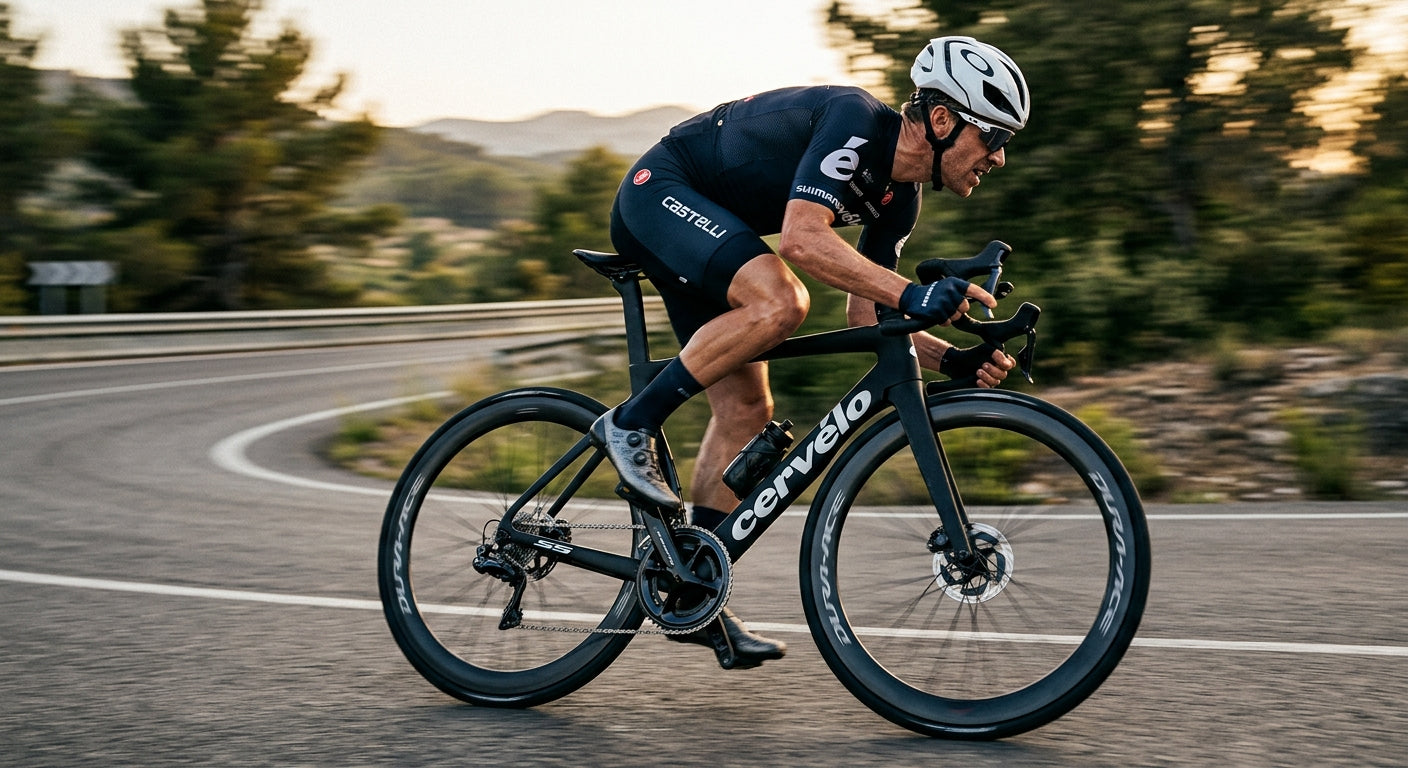
The primary motivation for investing in these groupsets is the pursuit of marginal gains. Shimano’s Hyperglide+ technology allows for seamless shifting even when applying maximum power during a sprint or a steep climb. The braking modulation on the Dura-Ace hydraulic callipers is arguably the industry standard, offering a level of control that inspires confidence on technical descents. Complement these with carbon-sole road cycling shoes to ensure efficient power transfer.
Campagnolo, however, offers the unique advantage of a 13-speed range. This extra gear allows for tighter spacing between ratios, enabling the rider to maintain an optimal cadence regardless of the terrain. For those who face variable gradients, the 13-speed setup is a transformative experience. Pairing this with a windproof vest ensures you remain comfortable during high-intensity training sessions in unpredictable British weather.

Looking to shave time off your personal best?
Get immediate pacing strategies and interval workout ideas directly on-site for free. Try asking Raye: 'What is the best threshold session to help drop my 10K time?' Get instant pacing tips
What are the press saying?
Industry journalists have been vocal regarding the distinct character of both groupsets. Critics generally agree that Shimano’s Dura-Ace Di2 is the most reliable "workhorse" for racing, citing its near-instantaneous shift speed and proven track record in the WorldTour. The consensus suggests that if your priority is pure performance and race-day reliability, Shimano remains the objective leader.
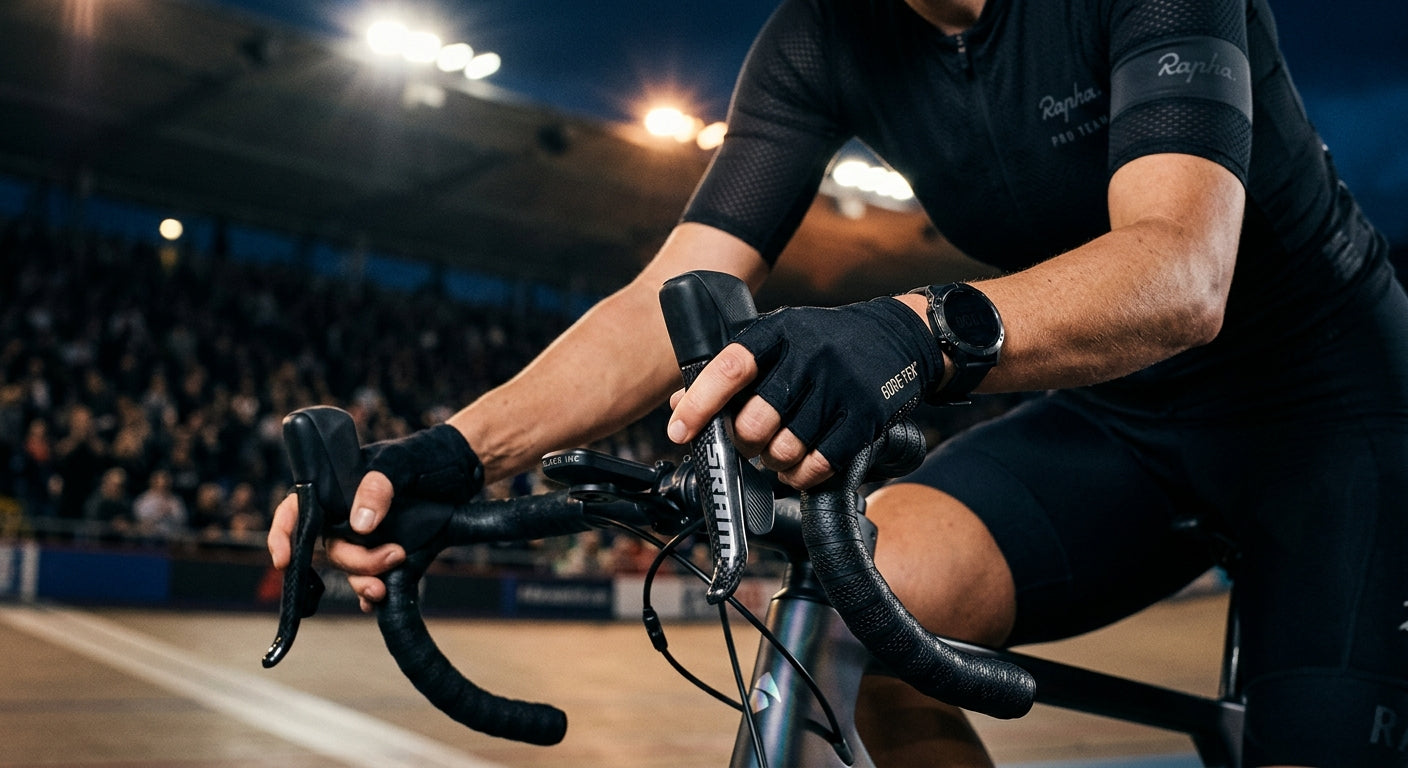
On the other hand, the press has lauded the Campagnolo Record 13 for its tactile feedback and elegant design. While some reviewers have noted that the 13-speed shifting is slightly more deliberate than Shimano’s, they highlight the superior ergonomics of the Ergopower levers, which many testers claim fit the hand more naturally during long-distance efforts. There is a verified excitement around the weight savings found in the Campagnolo crankset, which continues to undercut its Japanese counterpart.
What are the review sites saying?
User reviews and forum discussions provide a more nuanced view of the real-world experience. Public sentiment on cycling forums suggests that while Shimano’s battery life is legendary, the installation process for the internal wiring can be cumbersome for home mechanics. Many users have expressed frustration with the E-Tube app connectivity, describing it as occasionally temperamental compared to the streamlined interface offered by Campagnolo.
Rumours persist in the community regarding future firmware updates for the Campagnolo system that may further refine shift speed. Currently, the verified feedback indicates that Shimano’s braking feel is slightly more consistent in wet conditions, whereas Campagnolo owners often report that the aesthetic appeal and the exclusivity of the 13-speed drivetrain outweigh the minor differences in braking modulation. Ultimately, both groupsets represent the pinnacle of cycling engineering, and the decision rests on whether you value Shimano’s clinical efficiency or Campagnolo’s mechanical artistry.
