

Best Grips for the Sled Pull: Evaluating Hyrox Footwear Traction


Trying to beat your local Strava segment goals?
Fine-tune your training strategies to hit your target stats without downloading another app. Try asking Raye: 'How can I structure hill repeats to build short-segment power?' Ask how to hit your target
The Biomechanics of the Sled Pull
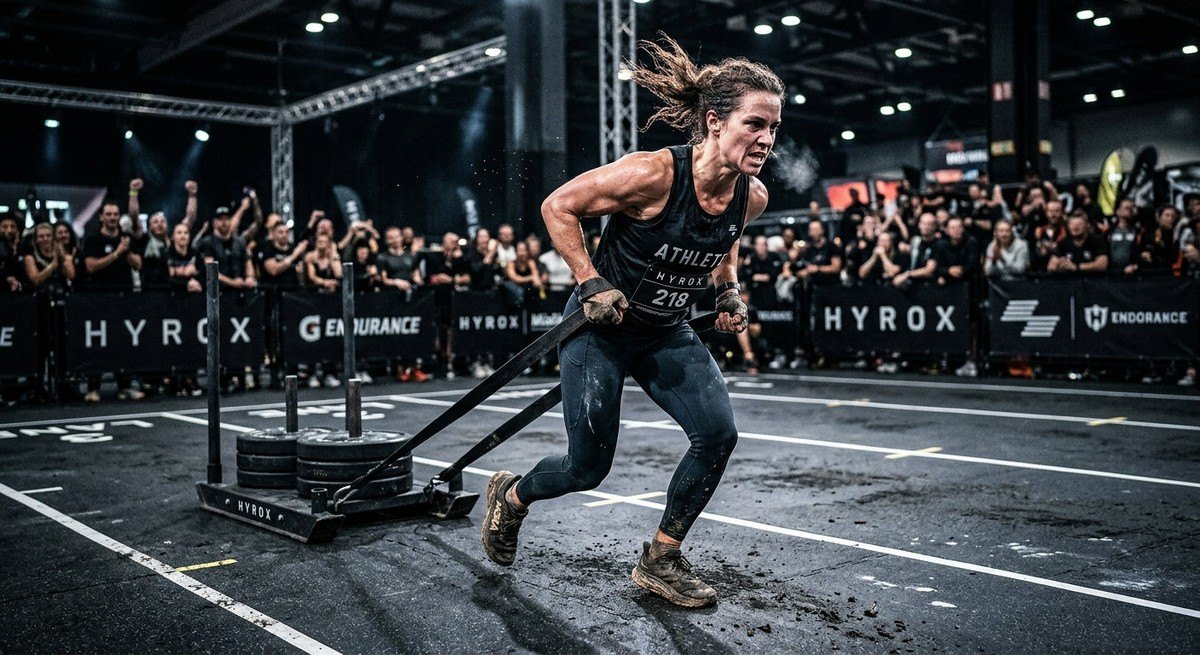
In the high-octane world of Hyrox, the sled pull serves as a brutal litmus test for an athlete's posterior chain and, crucially, their connection to the floor surface. Whether you are battling the slick synthetic turf or a slightly dusty rubberised track, the coefficient of friction between your outsole and the ground is the primary determinant of your power transfer. A marginal slip during a heavy pull does not just cost milliseconds; it disrupts the kinetic chain, leading to premature fatigue in the stabilising musculature.
To dominate the sled pull, one must prioritise footwear that offers a bespoke balance between lateral stability and longitudinal traction. The aggressive lugs found on trail shoes are often too soft, leading to 'squirm' under high load, whereas standard road racers may lack the necessary rubber compound to bite into the surface when you are in a deep, crouched position. Achieving optimal grip is a matter of physics: maximising surface area contact while ensuring the rubber durometer is optimised for high-friction engagement.
What do I need to buy
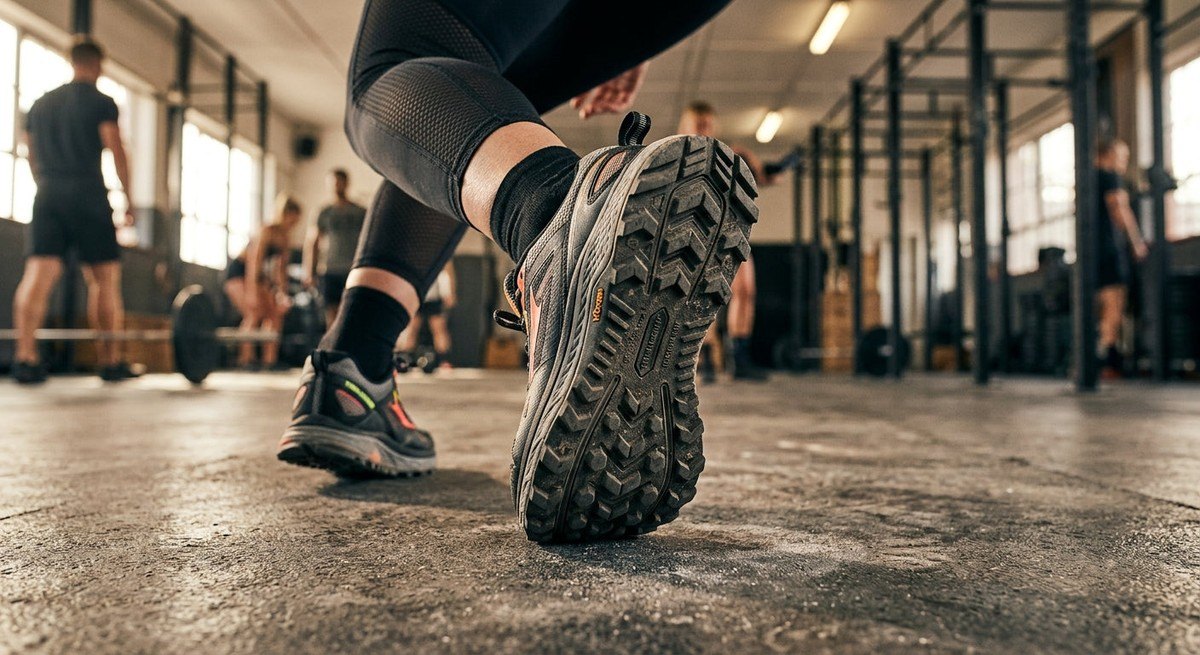
When curating your Hyrox arsenal, look for trainers featuring high-density carbon rubber outsoles. You are specifically looking for a flat, wide-base geometry that ensures maximum contact patch with the floor. Brands that utilise proprietary 'sticky' rubber compounds—often developed for climbing or elite weightlifting—are your best bet. Avoid shoes with excessive cushioning in the heel, as this creates a destabilising platform that forces your ankle to compensate, sapping your raw pulling power.
Furthermore, consider the upper construction. You need a lockdown system that prevents the foot from sliding inside the shoe when you are braced against the sled. Integrated midfoot cages or robust lace-loop systems are non-negotiable. If you find your feet slipping internally, the best outsole in the world will not save your split times. Invest in socks with high-friction silicone heel grips to further mitigate internal movement.
Why Should I invest?
Investing in specialist footwear is an exercise in marginal gains. In a sport where podium spots are often decided by the narrowest of margins, the confidence to drive through your forefoot without fear of slippage is invaluable. By reducing the energy leak caused by poor traction, you can maintain a higher work rate throughout the race, effectively delaying the onset of metabolic exhaustion.
Beyond the race day performance, the correct footwear protects your joints. When your traction is reliable, your movement patterns remain consistent and controlled. Conversely, slipping during a maximum-effort pull places erratic, shear forces on the knees and hips, significantly increasing the risk of acute injury. Treat your footwear as a piece of performance equipment, not merely a fashion accessory.

Hit a wall with form, pacing, or fatigue?
Skip searching forums. Chat directly on this page with our performance coach to solve training issues in seconds: 'How do I prevent side stitches on long runs?' Troubleshoot your run
What are the press saying?
Industry journalists have been vocal about the shift towards 'hybrid' footwear that bridges the gap between lifting and running. Early consensus suggests that the current market leaders are those that avoid the 'too soft' foam trap. Critics have noted that while some brands market their shoes as all-rounders, only a select few possess the outsole durability to withstand the abrasive nature of the Hyrox sled pull without losing their grip profile prematurely.
What are the review sites saying?
Verified user reviews and forum discussions indicate a clear divide in sentiment. While enthusiasts praise the grip of dedicated cross-training shoes, there is persistent speculation regarding the longevity of softer rubber compounds on the standard Hyrox surface. The prevailing wisdom among competitive athletes is to favour 'gym-focused' trainers over 'running-focused' counterparts, with many users reporting a 5-10% improvement in sled speed when switching to a flatter, firmer outsole design.
It is important to note that while some forums tout the benefits of barefoot-style shoes, these require significant adaptation periods. The general advice from the community is to prioritise a firm, wide-base trainer that provides enough support to handle the sheer force of the sled pull while remaining lightweight enough to maintain pace during the surrounding running segments.
Ultimately, the perfect grip is subjective, dependent on your specific biomechanics and weight distribution during the pull. However, by focusing on high-density rubber, a wide contact patch, and superior lockdown, you can ensure that your footwear works with you, rather than against you, as you conquer the sled.


