

The Ultimate Beginner's Guide to Surviving Your First Hyrox


Planning your next fitness milestone?
Get immediate guidance on pacing, workout structure, or race prep directly on-site for free. Try asking Raye: 'Can you outline a simple 4-week build plan for a 10K?' Get instant guidance
Step by Step Starting Out
Stepping into the world of Hyrox can feel like staring up at a mountain. It is a unique blend of functional fitness and endurance that challenges even the most seasoned athletes. First, you must understand the structure: eight rounds of one-kilometre running, each followed by a specific functional movement. It sounds straightforward, but the cumulative fatigue is the real hidden opponent. Your primary goal during the first few weeks is not speed, but movement efficiency and aerobic base building.
Start by breaking down the movements into manageable chunks. Do not worry about lifting heavy weights initially. Instead, focus on the technique for the Sled Push and Pull. These are where many beginners burn out early. Practise keeping your back flat and driving through your heels. Consistency is your best friend here; aim for three sessions a week where you alternate between running intervals and functional circuit training.
Once you are comfortable with the mechanics, introduce 'compromised running'. This is the secret sauce of Hyrox. After a set of lunges or burpees, immediately head to the treadmill or track. This mimics the race environment where your legs feel like jelly. By training your body to run under fatigue, you are conditioning your mind to stay calm when the race gets tough. This is how you build the mental resilience required to survive the final kilometre.
Finally, remember to prioritise recovery. Your muscles need time to adapt to the new stimulus. Listen to your body, and if you feel a niggle, take an extra rest day. It is better to arrive at the start line slightly under-trained than injured. Trust the process, keep your intensity moderate, and focus on steady progress rather than hitting personal bests immediately.
How to Build this into my life
Fitting Hyrox training into a busy schedule requires a bit of tactical planning. Look at your week as a series of blocks. If you have a hectic work schedule, try to front-load your harder sessions to the weekend when you have more time to recover. Use your lunch breaks for short, sharp cardiovascular bursts, like ten minutes of stair climbs or high-intensity interval sprints, to keep your heart rate up.

Consistency beats intensity every single time. It is much better to have four 45-minute sessions that you actually complete than one three-hour marathon session that leaves you burnt out for a week. Use a training log or a simple app to track your progress. Seeing those little wins—like shaving five seconds off your wall ball set or feeling less breathless after a run—is incredibly motivating.

Looking to shave time off your personal best?
Get immediate pacing strategies and interval workout ideas directly on-site for free. Try asking Raye: 'What is the best threshold session to help drop my 10K time?' Get instant pacing tips
Do not forget the social element. Find a local gym that hosts Hyrox-specific classes. Training alongside others who are on the same journey makes the difficult sessions feel significantly easier. The shared struggle creates a sense of camaraderie that is vital for keeping your spirits high when training gets monotonous. Plus, you will pick up tips from coaches that you simply cannot learn from a video.
Lastly, be kind to yourself. Some days, your legs will feel heavy and your energy will be low. That is perfectly normal. Adapt your session to match your energy levels rather than skipping it entirely. A light session of mobility work or a gentle jog is still progress. Keep showing up, keep moving, and you will find that the routine eventually becomes a part of your identity.
Essential Kit
You do not need a shed full of expensive equipment, but the right gear makes a massive difference. First and foremost, invest in a pair of high-quality, stable trainers with good cushioning. You will be spending a lot of time on your feet, and your joints will thank you for the extra support. Ensure they are broken in well before race day to avoid any nasty blisters.
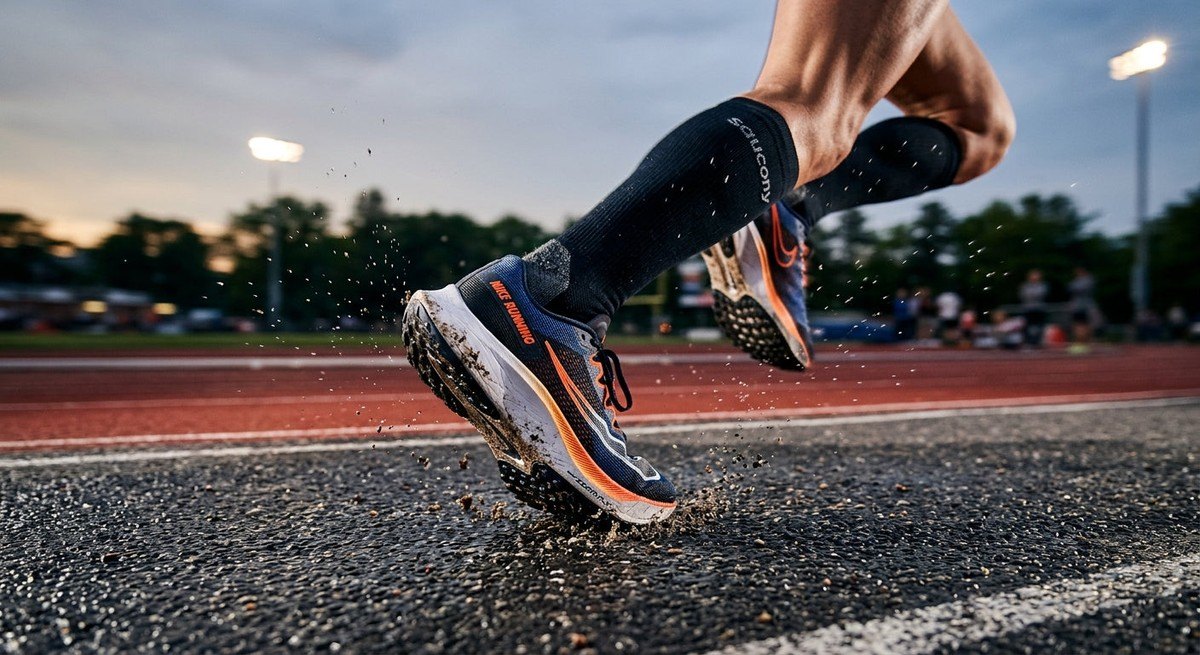
Clothing-wise, opt for moisture-wicking fabrics. Cotton is your enemy during a Hyrox race; it gets heavy, stays wet, and causes chafing. Look for shorts and tops that allow for a full range of motion, especially for those lunges and burpees. If you feel comfortable in your kit, you can focus entirely on the movement rather than adjusting your clothing every few minutes.
Consider a pair of knee sleeves if you have a history of joint discomfort. They provide warmth and a bit of compression, which can be a psychological boost during the heavy sled work. A reliable sports watch is also an essential tool for tracking your pace and heart rate, allowing you to manage your effort levels across the entire event.
Finally, keep a small bag packed with recovery essentials. A foam roller, a resistance band for activation work, and a simple protein shaker are perfect additions. Having your gear prepped and ready reduces the friction involved in getting to your workout. When the kit is ready, you are ready.
10 alternative items to try
- Weighted Vest: Incorporating a weighted vest into your runs helps build the specific muscular endurance needed for the sled pushes. It adds a layer of resistance that forces your core to work harder, simulating the heavy load of the race stations while improving your overall running economy and posture under pressure.
- Battle Ropes: These are excellent for building the grip and shoulder stamina required for the Farmer's Carry. Using them in short, high-intensity intervals helps your forearms adapt to the constant tension, ensuring that your grip does not fail you when you are carrying heavy kettlebells across the arena floor during the race.
- Resistance Bands: Essential for pre-workout activation and post-workout recovery. They help you perform targeted mobility exercises that keep your joints supple and reduce the risk of injury. Using them for glute activation before running ensures your posterior chain is firing correctly, which is vital for maintaining speed during the running segments.
- Foam Roller: A non-negotiable tool for any athlete. Regular foam rolling helps release tight fascia and improves blood flow to the muscles, significantly reducing delayed onset muscle soreness. It is a simple, effective way to manage the physical toll of high-volume training and keep your body feeling fresh and ready for sessions.
- Heart Rate Monitor Strap: While watches are convenient, a chest strap provides superior accuracy, which is crucial for monitoring your intensity zones. Staying within the correct heart rate zones during training prevents you from burning out too early in your sessions and helps you learn how to pace yourself for the actual race.
- Running Gaiters: Often overlooked, these protect your trainers from debris and provide a tighter fit, which can be helpful if you are running on varied terrain. While Hyrox is indoors, keeping your feet secure and comfortable in your shoes is paramount to preventing the small irritations that can derail a long session.
- Liquid Chalk: When your hands get sweaty during the Farmer's Carry or the Sled Pull, grip becomes a major issue. Liquid chalk provides a clean, reliable way to ensure your hands stay dry and secure on the handles, allowing you to focus on your technique rather than worrying about dropping the equipment.
- Recovery Protein Powder: Consuming high-quality protein immediately after your training sessions is vital for muscle repair and growth. It helps replenish the nutrients lost during intense exercise, ensuring that you recover faster and are ready to tackle your next training session with the same level of intensity and physical output.
- Stability Ball: Great for core work that translates into better balance during functional movements. Using a stability ball for crunches or planks forces your smaller, stabilising muscles to work harder, which provides a solid foundation for the heavy lifting stations, ensuring your core remains engaged and protected throughout the entire race.
- Massage Gun: A fantastic tool for targeted muscle relief. It helps to break up knots and improve circulation in specific areas that feel particularly tight after a heavy leg day. Used sparingly, it can be a real game-changer for maintaining flexibility and reducing the overall stiffness that comes with consistent, high-intensity training.


